15 questions

Body contouring: liposuction, abdominoplasty, fat grafting

Clinical answers on liposuction, abdominoplasty, autologous fat grafting and gluteal augmentation: indications, technical limits, scarring and durability.

Body contouring: liposuction, abdominoplasty, fat grafting
15
01

Is abdominal liposuction painful?

You feel no pain during the procedure, which is performed under general anaesthesia or regional anaesthesia with sedation. Afterwards the predominant sensation is tightness and a deep ache similar to intense exercise, most pronounced in the first 3 to 5 days and well controlled with prescribed analgesia.

Clinical detail

Discomfort depends on the area treated and the depth of intervention. Superficial liposuction for muscular definition typically aches more than deep-plane work alone. Multiple areas in one session are also harder than a single site.

The most underestimated source of discomfort is the compression garment. Most patients describe the tightness as more troublesome than the incisions themselves. It is nonetheless non-negotiable, since compression determines how the skin redrapes onto the abdominal wall.

RASA monitors recovery through a direct channel and titrates analgesia to individual response. Pain that increases rather than decreases after day three is an abnormal sign requiring immediate contact.

Clinically reviewed by Dr. Le Trung Kien, MD, Specialist Level II · Updated 12/08/2026. This information is for reference; the final indication rests with your surgeon after an in-person examination.
02

Will the fat come back after liposuction?

Adipocytes removed do not regenerate at that site, since adult fat cell numbers are largely fixed. However, if you gain weight, the remaining fat cells in untreated areas still enlarge. The result is weight gain distributed differently from before, rather than a return of fat to the original site.

Clinical detail

Understanding this mechanism sets accurate expectations. Liposuction durably changes fat distribution but does not confer immunity to weight gain. A patient gaining 10kg after abdominal liposuction typically notices more deposition on the back, arms and face than previously.

Keeping weight within a 3 to 4kg range of your postoperative figure is the practical condition for maintaining contour. This does not demand a severe regimen, only consistency.

For patients with established eating and activity habits, liposuction results hold for many years. This is also why RASA recommends stabilising weight before surgery rather than operating mid-weight-loss.

Clinically reviewed by Dr. Le Trung Kien, MD, Specialist Level II · Updated 12/08/2026. This information is for reference; the final indication rests with your surgeon after an in-person examination.
03

How much fat can be removed in one liposuction session?

The safety limit for a single session is approximately 10% of body weight. Beyond this, the risk of fluid shifts, hypothermia and cardiovascular complications rises substantially. Where a greater volume is indicated, RASA stages the procedure at least 3 months apart rather than attempting it in one sitting.

Clinical detail

The threshold refers to pure fat volume, excluding infiltrated tumescent fluid, and varies between individuals because it is tied to body weight rather than a fixed figure. It is the boundary between routine and large-volume liposuction, the latter requiring a higher level of postoperative monitoring.

In practice, volume is not what determines result quality. A moderate case executed in the correct plane, preserving an even residual fat layer, gives a far better outcome than an aggressive maximal case that leaves surface irregularity.

If a provider proposes removing substantially more than this in one session to save cost or time, that warrants reconsideration. This is a safety boundary, not a technical one.

Clinically reviewed by Dr. Le Trung Kien, MD, Specialist Level II · Updated 12/08/2026. This information is for reference; the final indication rests with your surgeon after an in-person examination.
04

What is the difference between a tummy tuck (abdominoplasty) and abdominal liposuction?

Liposuction removes subcutaneous fat only; it does not address skin laxity or muscle separation. Abdominoplasty excises redundant skin, plicates the separated rectus fascia and repositions the umbilicus. In short: liposuction treats fat, abdominoplasty treats skin and muscle.

Clinical detail

A simple self-assessment: lie supine and relax. If the abdomen flattens markedly, the problem is predominantly fat and liposuction may suffice. If a transverse skin fold persists, or you can palpate a midline gap between the muscle bellies, abdominoplasty is required.

Postpartum rectus diastasis is a mechanical problem, not a fat problem. No exercise closes an established fascial gap, and liposuction certainly does not. This is why many postpartum patients train diligently yet retain abdominal protrusion.

In practice the two are frequently combined in one operation: liposuction to contour the flanks and waist, abdominoplasty to address the central skin and muscle. The specific indication is determined only after in-person examination.

Clinically reviewed by Dr. Le Trung Kien, MD, Specialist Level II · Updated 12/08/2026. This information is for reference; the final indication rests with your surgeon after an in-person examination.
05

When do I need a tummy tuck instead of liposuction alone?

Abdominoplasty is indicated when at least one of three findings is present: redundant skin that will not retract, rectus diastasis following pregnancy or significant weight gain, and extensive striae over the lower abdomen. The most common groups are multiparous women and patients after major weight loss.

Clinical detail

Skin elasticity is the determining factor. Young skin without striae, never subjected to prolonged distension, retracts well after liposuction. Skin that has lost elasticity becomes looser the more fat is removed, because the volume supporting it is taken away.

Striae are a reliable clinical sign: they indicate rupture of dermal collagen, and such skin has essentially no retractive capacity. Where striae are concentrated on the lower abdomen, that segment can be excised during abdominoplasty.

An intermediate option is mini-abdominoplasty, addressing only infraumbilical skin through a shorter incision, suited to moderate skin excess without significant fascial separation.

Clinically reviewed by Dr. Le Trung Kien, MD, Specialist Level II · Updated 12/08/2026. This information is for reference; the final indication rests with your surgeon after an in-person examination.

06

How large are liposuction scars and where are they placed?

Liposuction access incisions are only 3 to 5mm, about the width of a pen tip, sufficient to admit the cannula. RASA places them within natural creases: the inguinal fold, infragluteal fold, umbilicus and bikini line. After 6 to 12 months most fade to faint dots that are difficult to identify unless pointed out.

Clinical detail

The number of access points depends on the area. Full abdominal liposuction typically requires 4 to 6 sites to allow cross-hatched access from multiple directions, which produces a more even surface than unidirectional passes.

Patients with a keloid tendency should disclose this. Keloid formation at a 3 to 5mm site is uncommon but can occur on the chest and upper back, regions with a higher propensity for hypertrophic scarring.

Post-inflammatory hyperpigmentation is more frequent than keloid in Asian skin. This is why RASA advises strict sun protection over scars for the first 6 months.

Clinically reviewed by Dr. Le Trung Kien, MD, Specialist Level II · Updated 12/08/2026. This information is for reference; the final indication rests with your surgeon after an in-person examination.

07

How long is a tummy tuck (abdominoplasty) scar?

A full abdominoplasty leaves a low transverse scar across the lower abdomen, typically 25 to 40cm depending on how much skin is excised, plus a small circular scar around the umbilicus. The line is placed low enough to sit within standard underwear and swimwear.

Clinical detail

This is the central trade-off of the procedure and deserves frank consideration beforehand: you exchange lax, striated skin and abdominal protrusion for a long but concealable scar. For patients who cannot accept a long scar, this is not the right operation.

Scar length is proportional to the skin excised. You cannot remove a large amount of skin and have a short scar; this is a geometric constraint, not a question of technique.

Scar quality depends heavily on care during the first 12 months: silicone therapy, absolute sun protection, no smoking, and avoiding tension across the line. Scars mature fully at 12 to 18 months; judging them earlier is premature.

Clinically reviewed by Dr. Le Trung Kien, MD, Specialist Level II · Updated 12/08/2026. This information is for reference; the final indication rests with your surgeon after an in-person examination.

08

Does liposuction cause skin laxity?

It can, if skin elasticity is already reduced. Liposuction removes the volume that was tensioning the skin, so elastic skin retracts with it while striated or aged skin becomes visibly looser afterwards. Assessing skin elasticity preoperatively is what determines the correct indication.

Clinical detail

A simple assessment is the pinch test: pinch a fold of abdominal skin and release. Elastic skin snaps back almost immediately. Slow return indicates poor retractive capacity.

Risk factors include age over 45, multiparity, a history of repeated weight cycling, extensive striae and smoking. These patients are usually advised to add a skin-tightening adjunct or to convert to abdominoplasty.

Wearing the compression garment for the full prescribed period genuinely affects how skin redrapes onto the abdominal wall; it is not a formality. Discontinuing it early is a common cause of laxity and surface irregularity.

Clinically reviewed by Dr. Le Trung Kien, MD, Specialist Level II · Updated 12/08/2026. This information is for reference; the final indication rests with your surgeon after an in-person examination.

09

What percentage of fat survives after a fat transfer?

Graft survival is typically 30 to 40%, depending on the recipient site, fat processing technique and individual factors. In the eyelid region it can reach 70 to 80%. Non-viable fat is resorbed over the first 3 to 6 months, so surgeons overcorrect relative to the target volume.

Clinical detail

The recipient site matters most, and the spread between sites is wide. Well-perfused, thin, relatively immobile areas such as the eyelids show the highest survival. Areas subject to pressure or movement, such as the buttocks, are considerably lower.

Multilayer placement of small aliquots on cannula withdrawal yields substantially better survival than injecting a single large bolus. Grafted adipocytes survive initially by diffusion from surrounding tissue, so the core of a thick bolus is under-nourished.

Fat surviving beyond 6 months persists long term as normal adipose tissue and will fluctuate with your weight. Some patients require a second session to reach the target volume; this is an expected course rather than a failure.

Clinically reviewed by Dr. Le Trung Kien, MD, Specialist Level II · Updated 12/08/2026. This information is for reference; the final indication rests with your surgeon after an in-person examination.

10

Is gluteal fat grafting (BBL) safe?

Gluteal fat grafting carries higher risk than fat transfer to other sites, owing to fat embolism if fat is injected into the muscle and reaches the gluteal veins. This risk is substantially reduced by adhering to subcutaneous-only placement, never injecting intramuscularly, using a large-bore blunt cannula and combining this with ultrasound guidance during grafting.

Clinical detail

This has historically been the aesthetic procedure with the highest reported mortality in the international literature, and essentially all severe cases involved intramuscular fat injection. Since plastic surgery societies recommended subcutaneous-only placement, serious complication rates have fallen markedly.

Ultrasound guidance lets the surgeon see the boundary between the subcutaneous plane and the muscle in real time rather than relying on tactile feedback alone. It meaningfully increases the safety of the technique.

A consequence of this safety principle is a volume ceiling: the subcutaneous plane accommodates less fat than the muscle. A safe case gives a moderate result rather than an exaggerated shape. If a provider promises very large volumes in one session, ask directly which plane they inject.

RASA assesses candidacy based on harvestable fat volume, gluteal skin elasticity and pelvic framework. Not everyone is a suitable candidate, and in many cases an implant or combining liposuction of adjacent areas produces a more balanced result.

Clinically reviewed by Dr. Le Trung Kien, MD, Specialist Level II · Updated 12/08/2026. This information is for reference; the final indication rests with your surgeon after an in-person examination.

11

What is the difference between gluteal implants and fat grafting?

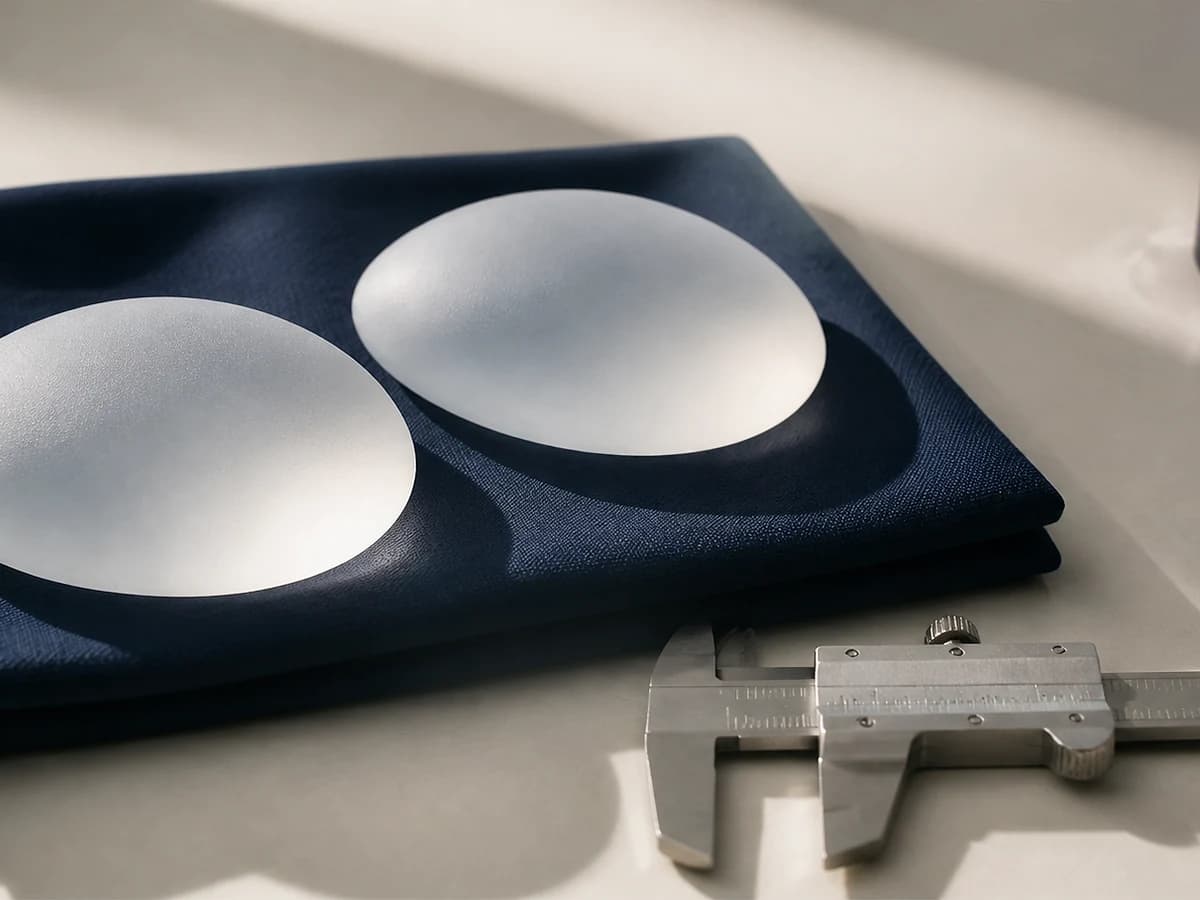
Fat grafting uses your own tissue, feels natural and simultaneously improves waist contour by harvesting from there, but requires adequate donor fat and a portion will resorb. Implants provide stable, predictable volume and suit slim patients with little donor fat, but are a synthetic device with risks of malposition and capsular contracture.

Clinical detail

The deciding factor is usually practical: whether you have enough donor fat. Patients with a low BMI often lack sufficient reserve for a meaningful gluteal graft, leaving implants as the only viable option.

Fat grafting has a dual benefit implants cannot offer: the donor area, typically the waist and lower back, is slimmed. This contrast effect often contributes more to the result than the volume added to the buttocks.

The two address different dimensions and are therefore often complementary. An implant adds substantial gluteal projection. Fat grafting adds volume and contour in areas an implant cannot reach. Combining them is a sound option where both projection and a soft outline are needed, although these are complex cases requiring careful indication.

Clinically reviewed by Dr. Le Trung Kien, MD, Specialist Level II · Updated 12/08/2026. This information is for reference; the final indication rests with your surgeon after an in-person examination.

12

What is abdominal etching (six-pack definition surgery)?

Abdominal etching is selective superficial liposuction along the natural tendinous inscriptions of the abdominal wall to accentuate rectus definition. It suits patients who already have developed musculature and a thin fat layer; it does not create abdominal muscle in someone who has not trained.

Clinical detail

The key point before deciding: this technique reveals existing muscular structure, it does not create new muscle. If the rectus is undeveloped, superficial liposuction produces a flat surface without definition.

It is the most precision-dependent technique in the liposuction family because it works in the superficial plane close to the dermis. Over-resection or uneven passes leave surface irregularity that is difficult to correct. Executed correctly, the result reads as a genuinely trained physique.

Outcomes depend closely on continued training afterwards. Weight gain erases definition faster than after conventional liposuction, because the tolerance for added fat here is narrow.

Clinically reviewed by Dr. Le Trung Kien, MD, Specialist Level II · Updated 12/08/2026. This information is for reference; the final indication rests with your surgeon after an in-person examination.

13

Does thigh liposuction cause contour irregularity?

The thigh carries a higher risk of irregularity than the abdomen because the fat layer is thinner and inner thigh skin is thin and less elastic. This is managed by cross-hatched, even passes, preserving a minimum residual fat layer and avoiding suction too close to the dermis. The inner thigh requires the greatest caution.

Clinical detail

The outer thigh and flank have thicker fat and skin and tolerate liposuction better. The inner thigh is the opposite: thin skin, poor elasticity, prone to visible surface irregularity and postoperative laxity.

Oedema and tissue firmness during the first 4 to 8 weeks make the surface look uneven. This is an expected course and should not prompt early conclusions. The contour generally settles at 3 to 6 months.

Modern liposuction technologies minimise this risk through better control of the working plane and reduced tissue trauma. Even so, the surgeon’s technique remains the most important factor; equipment supports skill rather than substituting for it.

Manual lymphatic drainage and wearing compression for the prescribed duration genuinely reduce localised fibrosis, the main cause of a rippled postoperative surface.

Clinically reviewed by Dr. Le Trung Kien, MD, Specialist Level II · Updated 12/08/2026. This information is for reference; the final indication rests with your surgeon after an in-person examination.

14

How long until the jawline is defined after chin (submental) liposuction?

A clear difference appears from weeks 3 to 4 as the main swelling resolves, with the jawline sharpening progressively and settling at around 3 months. The final result depends on cervical skin retraction, so younger patients with elastic skin see faster and more pronounced improvement.

Clinical detail

Two causes of submental fullness must be distinguished. Subcutaneous fat accumulation responds well to liposuction. Skin laxity, platysmal separation or a poorly developed jawline does not, and liposuction alone may accentuate the laxity.

Patients over 45, or with cervical skin that has lost elasticity, usually need an adjunctive tightening or neck lift procedure. This is why RASA assesses cervical skin elasticity before accepting an isolated submental liposuction indication.

A chin compression garment is required in the early weeks, for a duration specified by the surgeon. This directly affects how the skin redrapes onto the jawline.

Clinically reviewed by Dr. Le Trung Kien, MD, Specialist Level II · Updated 12/08/2026. This information is for reference; the final indication rests with your surgeon after an in-person examination.

15

Does liposuction help with weight loss?

Not meaningfully. Fat has low density, so the volume removed does not translate proportionately into weight on the scale. Liposuction changes shape and circumferential measurements rather than body weight. If weight loss is the goal, the solution lies in nutrition and activity, not surgery.

Clinical detail

The measures that reflect liposuction results are circumference and body proportion, not weight. Many patients drop two to three clothing sizes with essentially unchanged weight.

Liposuction also does not affect visceral fat, the deep layer surrounding the organs. That is the fat associated with cardiometabolic risk and it responds only to lifestyle change. A protuberant abdomen driven by visceral fat will not improve substantially after subcutaneous liposuction.

A rough distinction: subcutaneous fat can be pinched into a thick fold; a firm, evenly rounded abdomen that cannot be pinched usually reflects visceral fat.

Clinically reviewed by Dr. Le Trung Kien, MD, Specialist Level II · Updated 12/08/2026. This information is for reference; the final indication rests with your surgeon after an in-person examination.

Haven’t found the answer you need?

The first consultation at RASA is free and conducted personally by Dr. Le Trung Kien. You are not asked to decide during the consultation.

Zalo
Care team support