Lecture note
A facial rejuvenation strategy should not begin with a device name. This lecture places VASER, Renuvion, fat grafting and threads within the anatomy, indication and safety limits of each patient.
1. RASAxVietCan: from a device lecture to a treatment framework
The RASAxVietCan lecture does not frame facial rejuvenation as a contest between devices. It begins with three changes that often coexist: volume loss or redistribution, reduced soft-tissue firmness and displacement of aesthetic landmarks.
VASER, Renuvion, fat grafting and threads are therefore assigned different tasks. The value lies in choosing the right tool, tissue plane, sequence and indication limit.
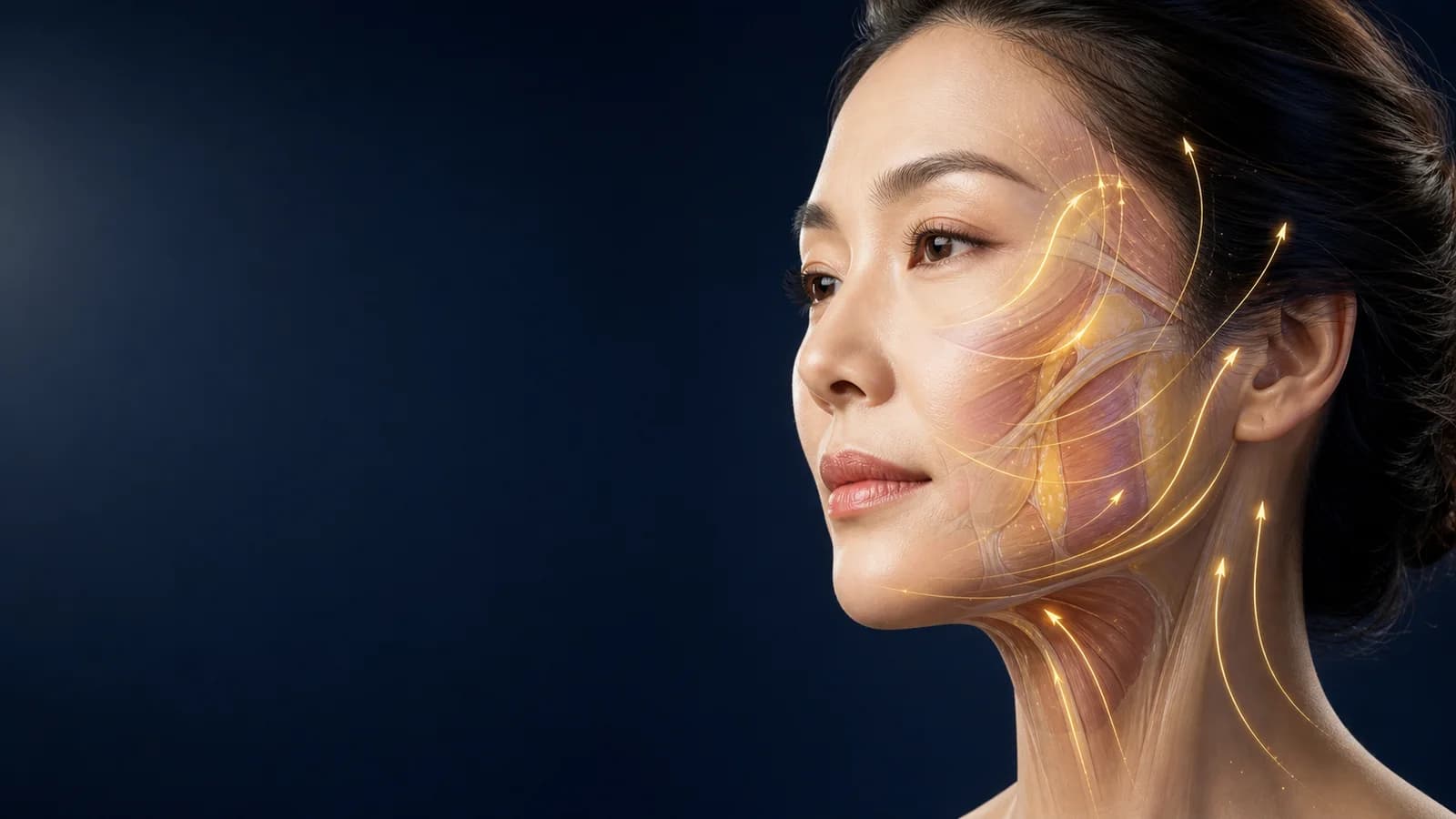
2. Start with the patient problem, not the device
A face can be hollow at the temple, depleted in the midface, heavy in the lower face and poorly defined at the jawline at the same time. Treating only surface laxity or only fat can therefore create an incomplete result.
The lecture organizes planning around three verbs: restore, tighten and lift. Volume is restored where needed, tissue is tightened after an adequate working plane is created, and only selected landmarks receive a dedicated lifting vector.
3. Four tools with four different jobs
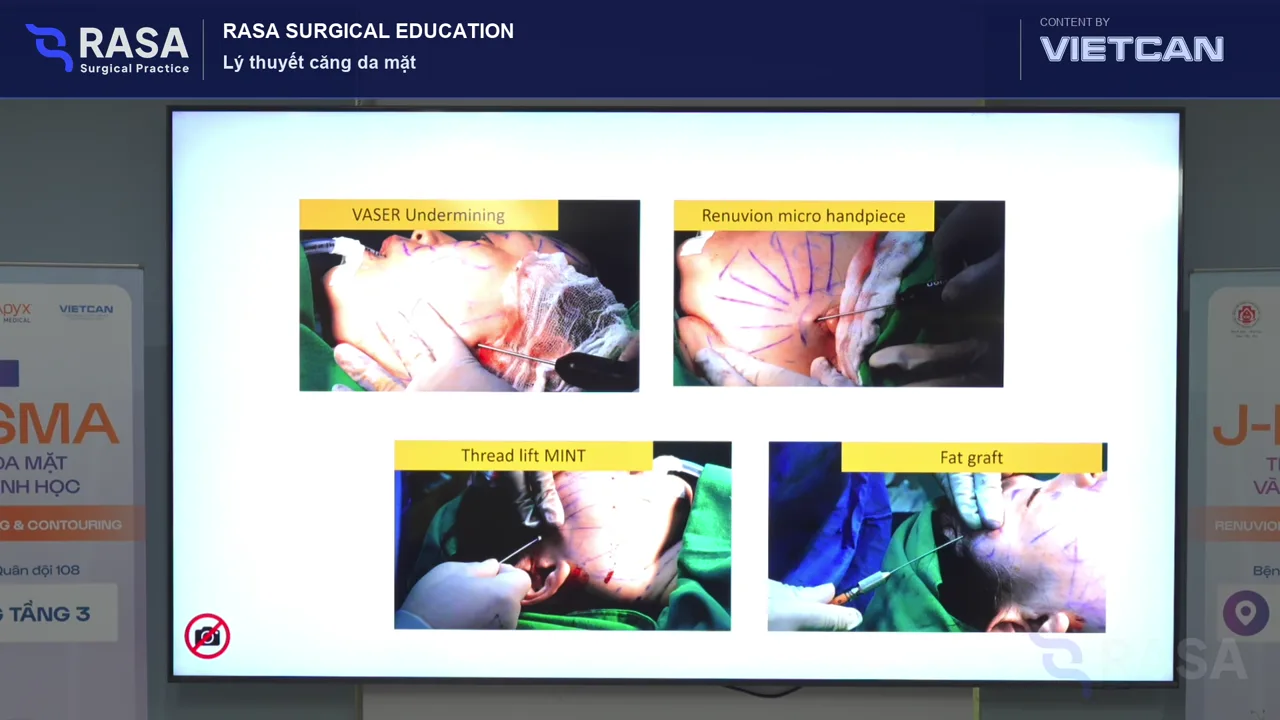
VASER prepares the working plane and manages fat selectively. Renuvion targets the subcutaneous fibroseptal network. Fat grafting restores depleted volume. Threads refine lifting direction after volume and laxity have been addressed.
The same fat-reduction strategy should not be applied to every region. Midface volume may need preservation, while the lower face, submental area and neck may benefit from selective reduction and contour definition.
4. Undermining and handpiece selection shape technical quality
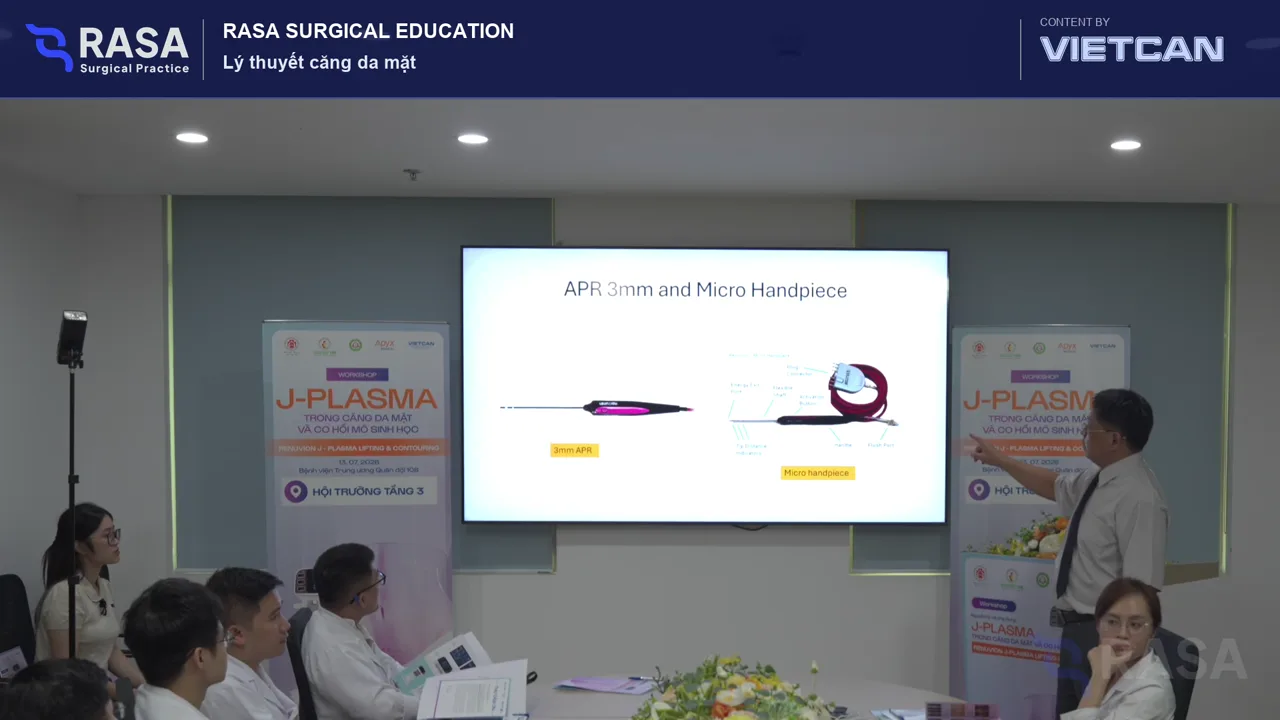
Adequate undermining allows the probe to move along a planned path, reduces traction and supports more consistent energy distribution. It is a core condition for both efficacy and safety.
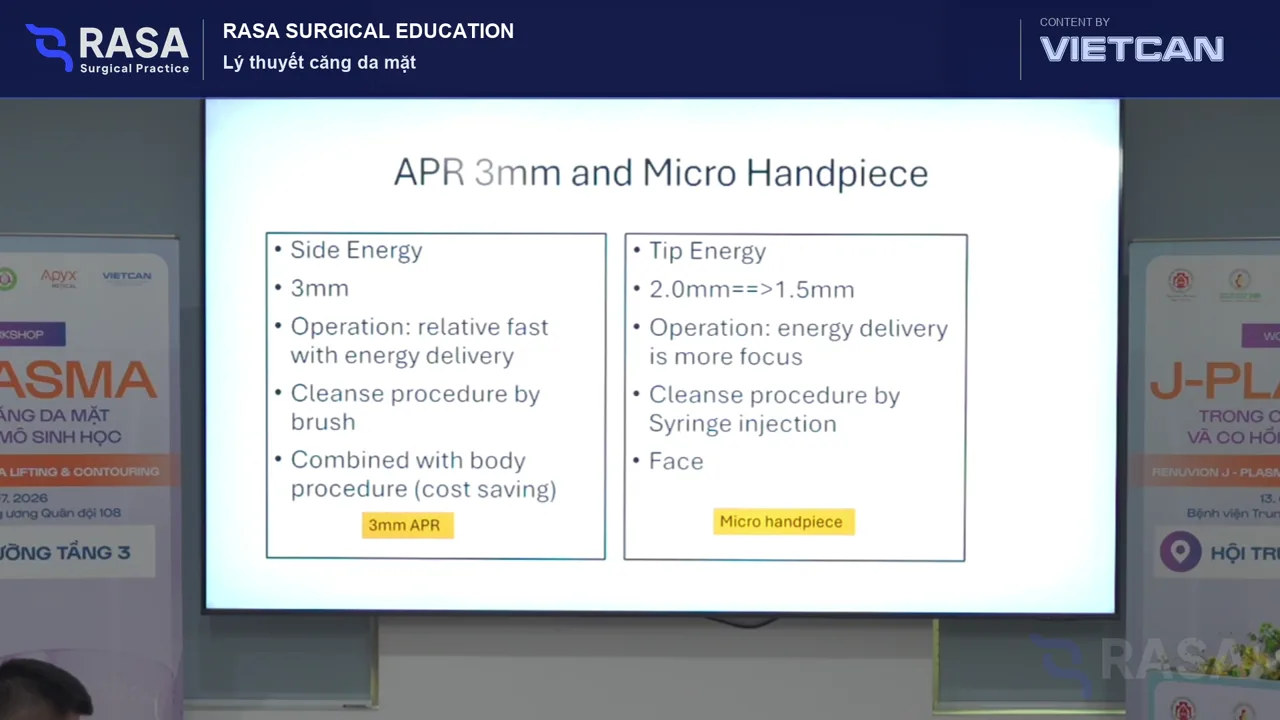
APR 3 mm and the micro handpiece differ in energy delivery and working scale. Selection must reflect the region, tissue thickness, proximity to risk structures and the surgeon’s control of the probe path.
5. Nerve safety is a system of actions
The lecture highlights the marginal mandibular, frontal and supraorbital nerves, together with orbital protection. The non-dominant hand helps localize the probe, maintain distance, protect the surface and limit unnecessary traction.
Tumescent infiltration, the correct plane, controlled speed and awareness of the active tip near access sites must function as one continuous safety sequence.
6. Regional application and multimodal sequencing
The forehead and temple often require both envelope tightening and volume restoration. The midface should not be over-debulked. The lower face, submental area and neck may require release, selective fat management and contour reinforcement.
Threads are used late in the sequence as a touch-up for selected landmarks. External tape fixation can then support the intended vector during early tissue stabilization.
7. Indication limits: minimally invasive treatment does not replace facelift in every patient
The strategy is more suitable for mild to moderate laxity, adequate residual elasticity and patients seeking contour refinement within biological limits. Marked tissue descent or major skin excess may be better addressed with conventional facelift or endoscopic brow lifting.
This material is for professional education and does not replace direct assessment, individualized indication, official device instructions or supervised hands-on training.