Lecture note
An academic note from the advanced Silhouette Soft course in South Korea on why thread lifting should be understood through tissue planes, fixation and measured lifting.
1. Why Silhouette Soft should be read through anatomy
Thread lifting is often reduced to pulling tissue upward. That simplification misses the central point: a thread only becomes meaningful when it is placed in the right tissue layer, with the right vector and the right degree of lift for a specific face.
The advanced Silhouette Soft course in South Korea framed the technique as professional education rather than a fixed recipe. The important questions are how the thread is built, how the cones hold tissue, how soft-tissue quality affects fixation and where the indication boundary sits.
2. Thread structure determines tissue fixation
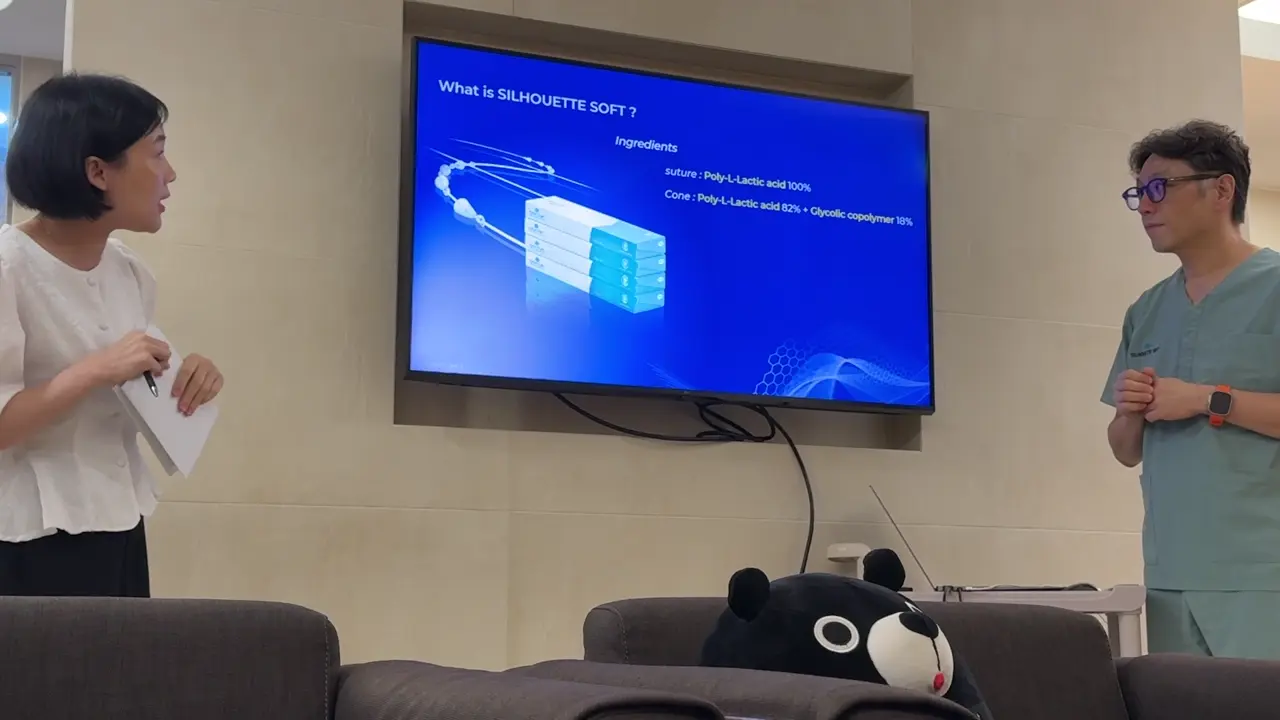
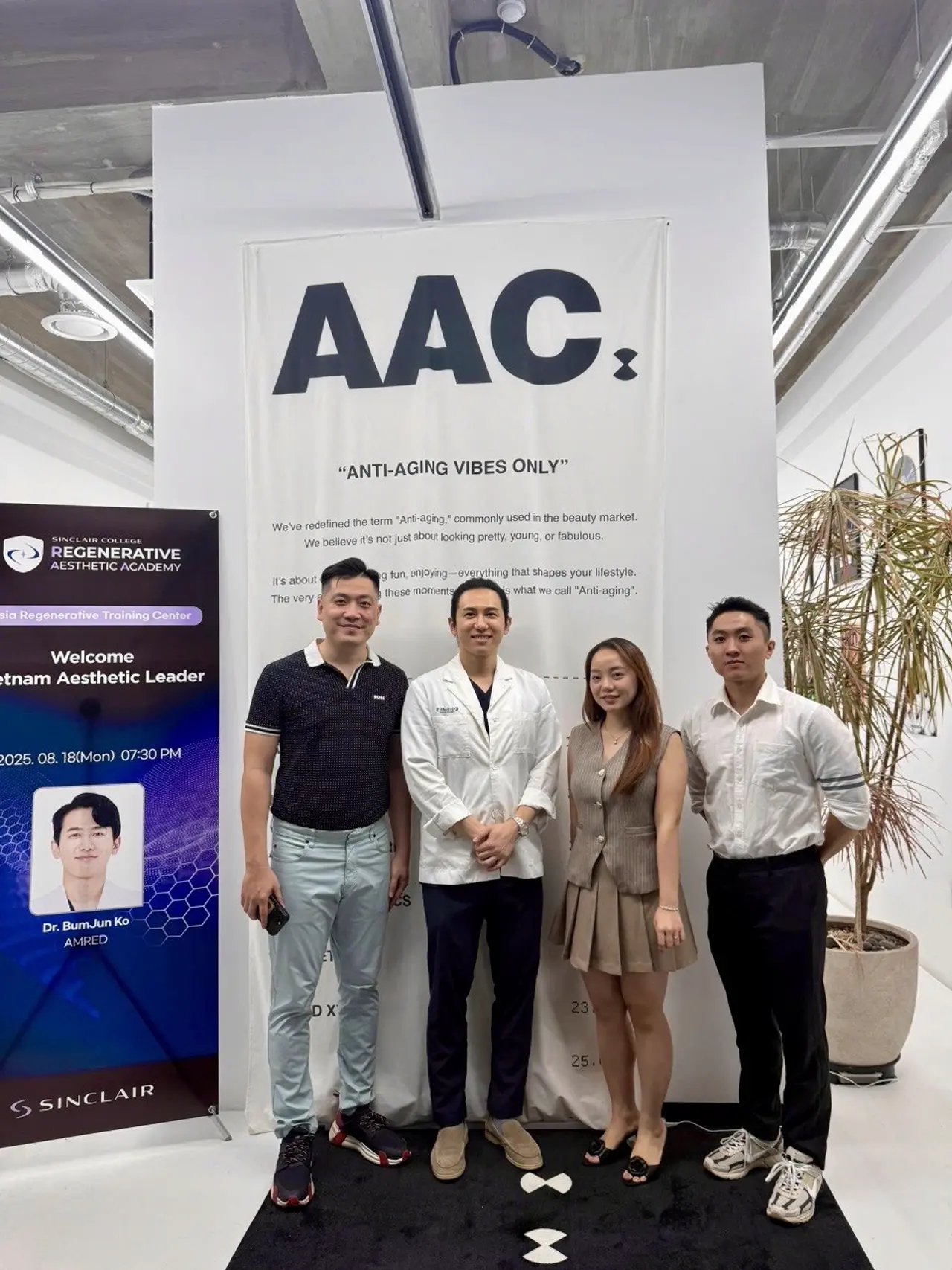
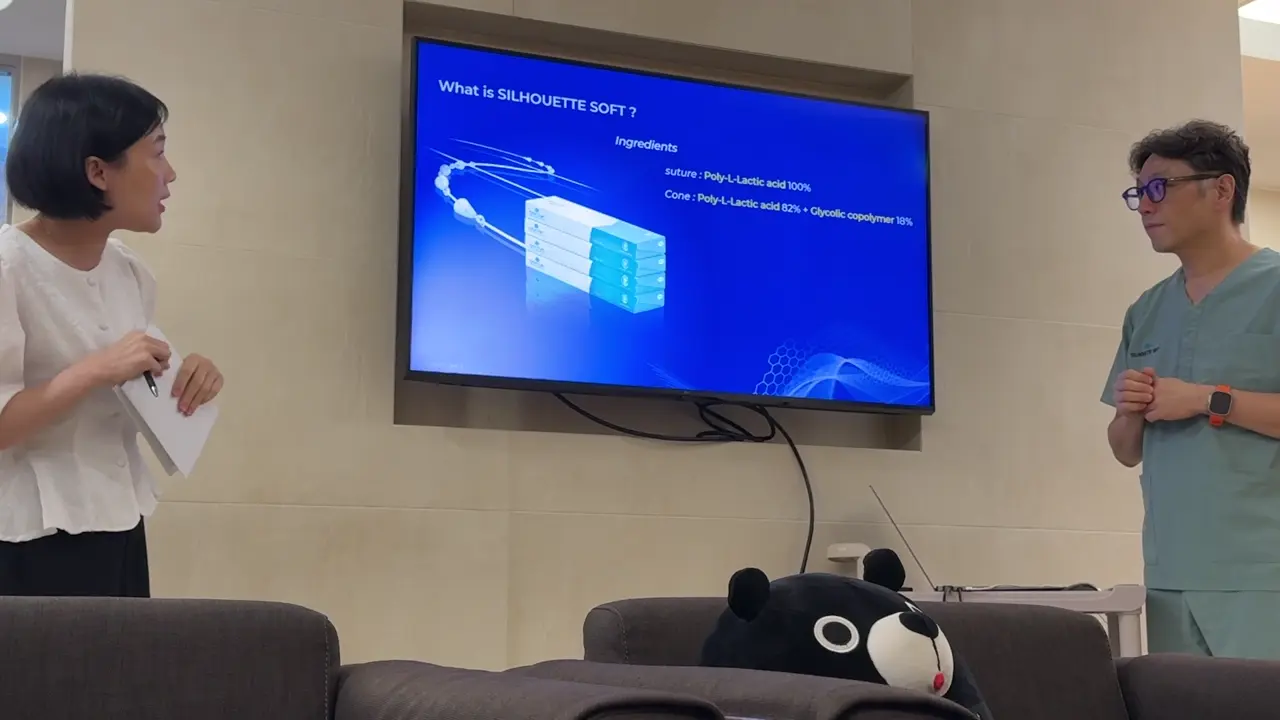
The selected video excerpt discusses Silhouette Soft structure. The speaker explains that the system is not just a long thread. It includes cones that help fix tissue; the thread is made from PLLA, while the cones combine PLLA with glycolide copolymer.
The clinically relevant point is the cone mechanism. When used in the correct plane, the cones distribute tissue-holding forces in a softer and more flexible way than a purely surface-pulling concept would suggest.
3. The tissue plane is the safety decision
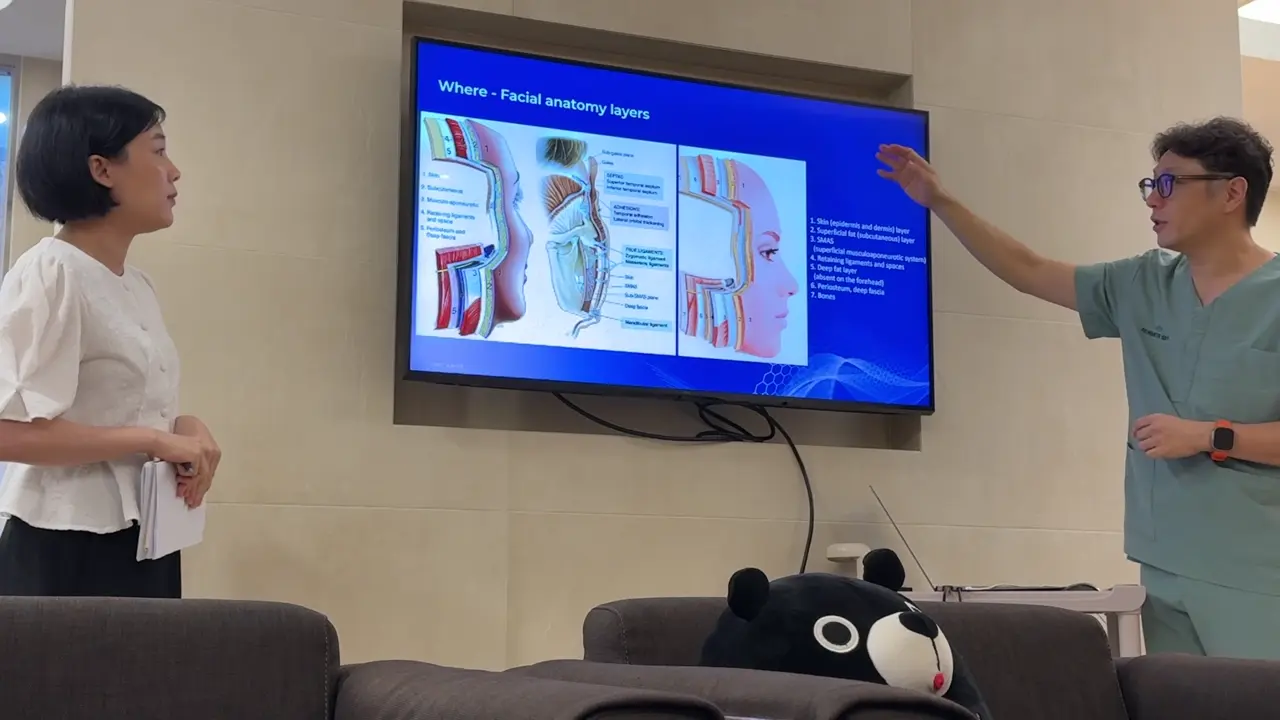
A key part of the excerpt is tissue depth. The speaker emphasizes placing the thread in the superficial fat layer beneath the skin, neither too deep nor too superficial. That detail determines both effect and safety.
If the thread is too superficial, visibility, irregularity, discomfort or expression-related distortion may increase. If it is too deep, the thread may miss the intended tissue plane and create unnecessary risk. Thread lifting is therefore an anatomical placement decision, not simply a pass-through maneuver.
4. Indication limits matter
Thread lifting can be useful for mild to moderate tissue descent, relatively good tissue quality and a patient who wants a measured improvement with shorter recovery. It should not be presented as a substitute for facelift surgery when skin excess or soft-tissue descent is advanced.
RASA includes this topic in Surgical Education because less invasive does not mean less anatomical. The lighter the intervention, the more precise the indication must be.
5. From the Korean course to RASA indication thinking
The value of the course is not to turn Silhouette Soft into a default answer for every ageing face. Its value is in forcing a sequence of clinical questions: where is the tissue descent, can the soft tissue hold the thread, which vector fits the face and does the patient understand the realistic degree of improvement?
In practice, RASA does not treat thread lifting as a universal substitute for facial rejuvenation. Some faces may be better served by skin quality work, energy-based treatment, carefully indicated fillers, surgery or a staged multimodal plan. Silhouette Soft only makes sense when it sits in the correct position within that treatment map.
6. Video excerpt: reading the thread structure correctly
The thread-structure excerpt clarifies a foundational point: the effect of Silhouette Soft does not come from simply pulling skin, but from the way material, cones and tissue plane work together to create controlled fixation.
Placed inside an anatomy discussion, the excerpt shows why the same thread can behave differently when plane, vector or soft-tissue quality changes. That is the difference between understanding the mechanism and merely remembering a technique name.
The excerpt also has a clear limit. It can illustrate material principles and tissue-plane thinking, but it cannot establish treatment indication. Thread-lifting decisions still require direct assessment of tissue descent, skin quality, previous procedures, expectation and risk.
Source material and usage limits
This article is based on selected material from the advanced Silhouette Soft course in South Korea, combined with RASA Surgical Practice academic interpretation of tissue planes, fixation mechanism and indication limits.
It is intended for professional education and does not replace direct consultation. Any thread-lifting or facial rejuvenation decision must be individualized after clinical assessment by an appropriately qualified physician.