Lecture note
An academic summary from BTS Stockholm 2026 Day 2, reading modern breast surgery through indication algorithms, soft-tissue quality, scaffolds, implant materials, long-term complications and ultrasound follow-up.
1. Day 2: breast surgery as a decision system
The second working day of Beauty Through Science Stockholm 2026 places breast surgery at the center of the surgical programme. The day is best read as a sequence of decisions: indication, tissue quality, pocket control, mastopexy planning, infection reduction, soft-tissue support, implant material and long-term follow-up.
From RASA Surgical Practice perspective, Day 2 moves beyond choosing implant volume. A breast operation should be planned as a biological and mechanical problem involving skin quality, soft-tissue coverage, nipple-areola position, lower-pole support, implant pocket, need for mastopexy, contamination control and follow-up strategy.
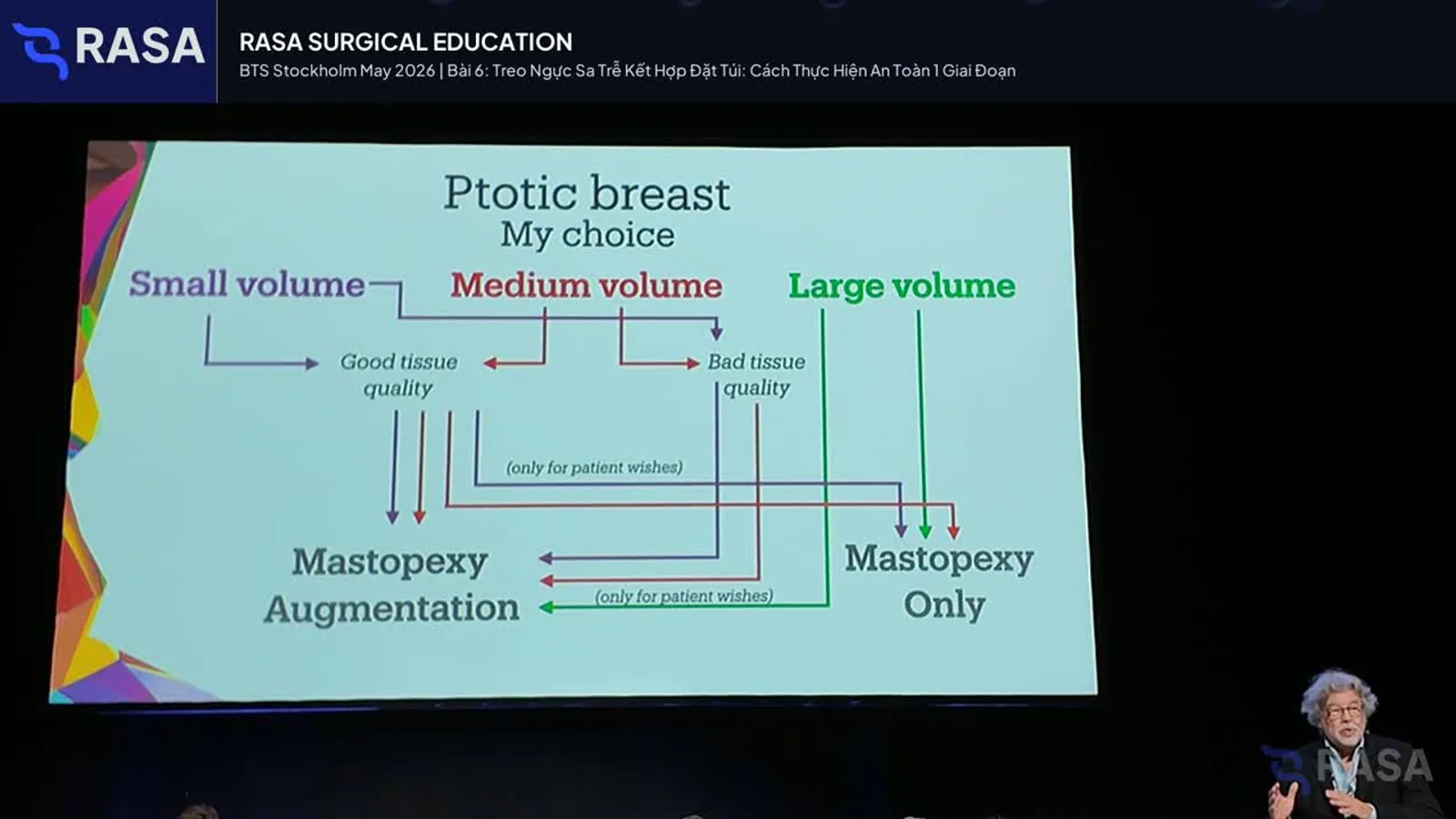
2. Indication algorithms and individualized planning
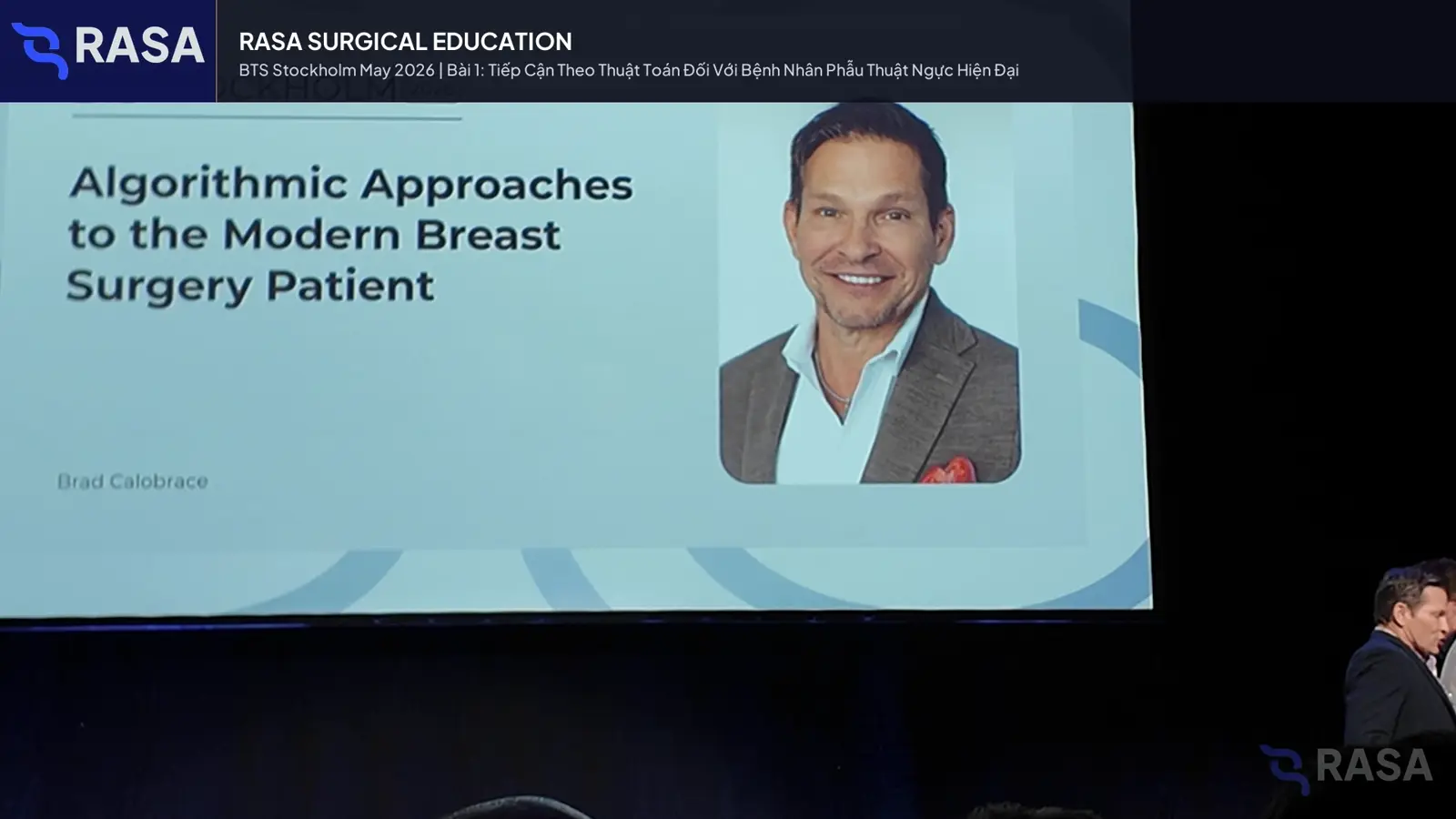
Dr. Brad Calobrace opens the breast surgery block with algorithmic approaches to the modern breast surgery patient. The value of an algorithm is not to replace clinical judgement, but to force each variable to be checked before a plan is chosen.
The related lectures by Dr. Patrick Mallucci, Dr. Wouter van der Pot, Dr. Roy de Vita and Dr. Brad Calobrace extend the discussion to weight-loss patients, revision surgery, one-stage mastopexy augmentation and the T-junction in inverted-T mastopexy augmentation.
- Ptotic and pseudo-ptotic breasts require assessment of nipple-areola position, glandular volume, skin excess and lower-pole strength.
- One-stage mastopexy augmentation is reasonable only when soft tissue allows safe control of volume, vector and perfusion.
- Revision surgery begins with pocket, scar, capsule, previous implant and patient expectation analysis.
3. Tissue preservation and contamination control
The tissue preservation and contamination-control topics remind surgeons that breast surgery is not only a volume-shaping procedure. It is also the protection of the biological environment around the implant.
Dr. Paolo Montemurro lecture on subtle surgical strategies to reduce contamination is important because it returns attention to operative sequence, implant handling, pocket preparation, instrument changes, pocket irrigation and exposure time.
The Motiva session by Dr. Marie Jaeger and Dr. Wouter van der Pot is read here academically: when biology and anatomy lead, primary augmentation, hybrid augmentation and mastopexy augmentation should prioritize tissue preservation, plane control and reduced tension.
4. Scaffolds: support materials need a clear mechanical goal
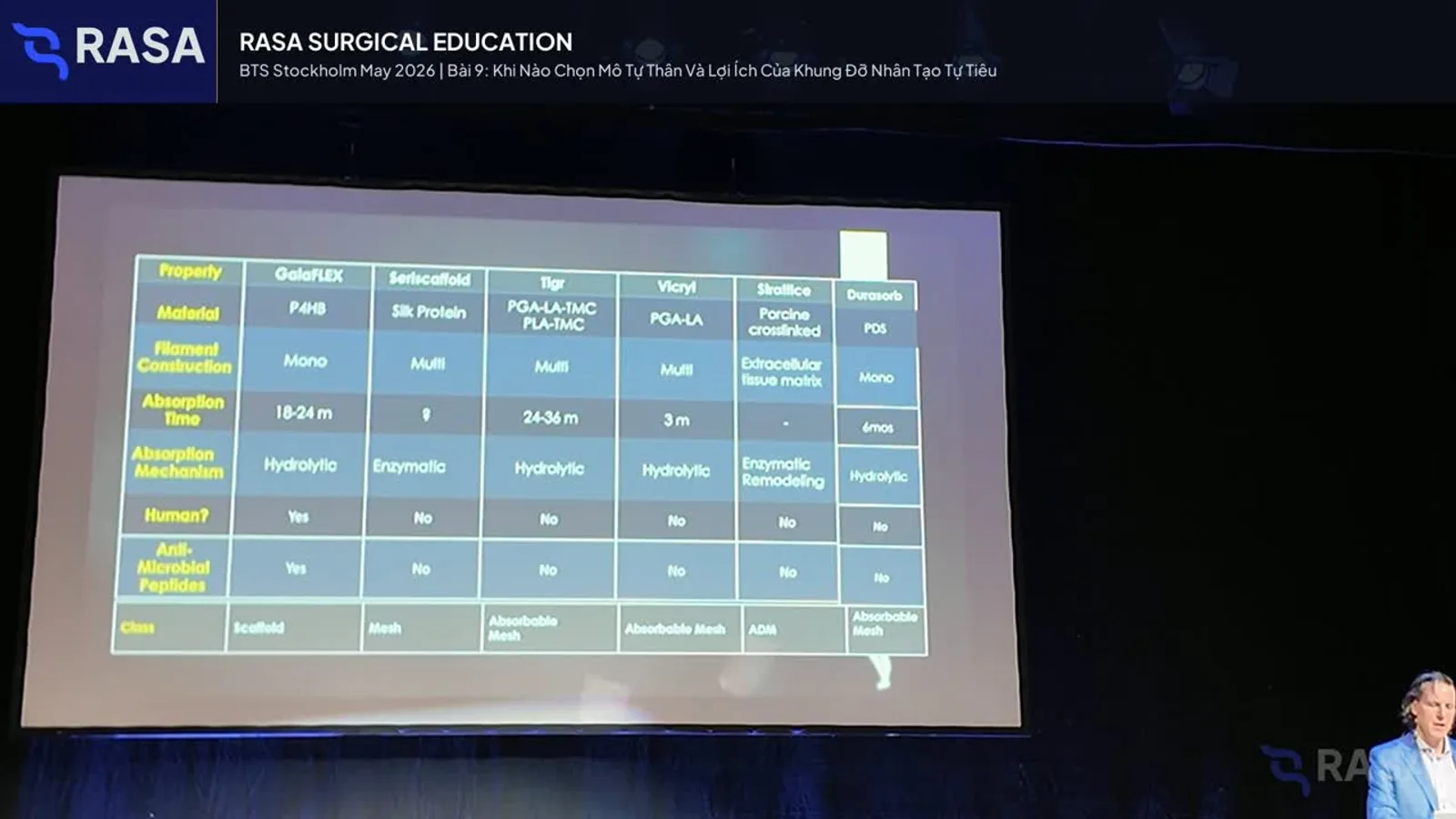
The scaffolds in breast surgery block, chaired by Dr. Bill Adams and Dr. Roy de Vita, shifts the question toward mechanics. When soft tissue cannot provide enough support, the surgeon must decide whether an additional support material is justified and what it is meant to solve.
ADM, P4HB and absorbable scaffolds should not be treated as technical accessories. They must be evaluated by a practical clinical question: which mechanical weakness are they correcting in this specific patient.
- Scaffolds should be considered according to tissue quality, lower-pole support, surgical history and long-term deformation risk.
- Mechanical benefit must be weighed against infection risk, tissue integration, absorption timeline and treatment cost.
- Soft, durable results still depend on dissection, pocket control and fixation technique.
5. Hybrid breast augmentation and implant technology
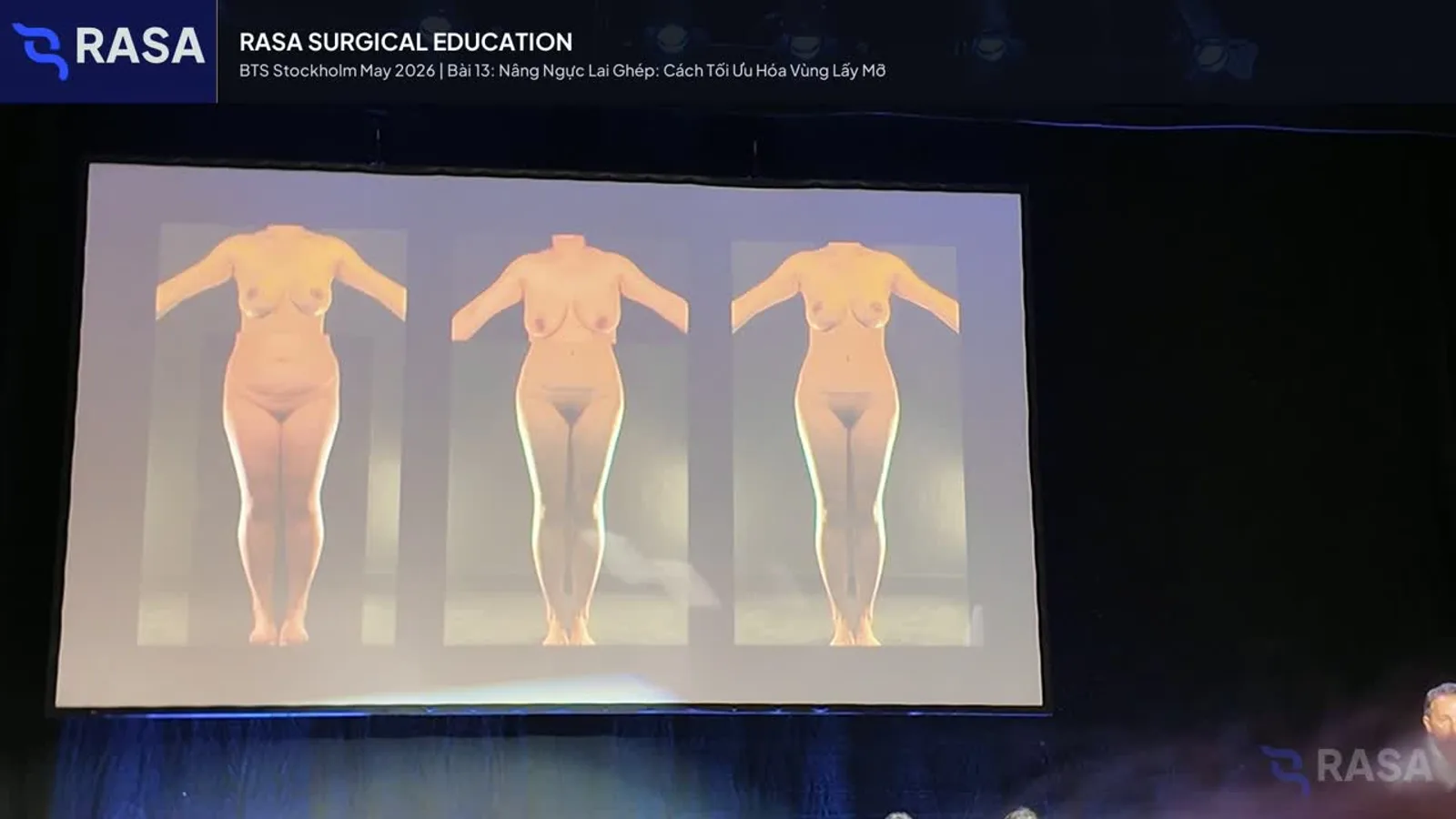
The Look Live block on hybrid breast augmentation expands the planning frame from implant selection to donor-area strategy, fat quality and soft-tissue coverage. Hybrid augmentation is not simply adding fat around an implant; it is a way to refine transitions and improve coverage in selected patients.
The POLYTECH session adds another layer around implant materials: shell, gel, form stability, weight, tissue pressure and follow-up data. The video at the top of this article is selected because it illustrates a key concept: the same volume does not necessarily create the same mechanical burden on tissue.
No material can turn a weak indication into a strong one. Lighter implants, more form-stable gel or different surfaces are only meaningful when they fit the patient anatomy, soft tissue, aesthetic goal and follow-up strategy.
6. Implant longevity and ultrasound follow-up
The all about implants longevity block moves breast surgery beyond the operating room. Lectures by Dr. Yoav Barnea, Dr. Marie Jaeger, Dr. Roy de Vita, Dr. Patrick Mallucci, Dr. Birgit Stark and Dr. Bill Adams address implant rupture, capsular contracture, explantation, implant ageing and ultrasound follow-up.
Patient communication is central. Breast implants are medical devices with ageing and cumulative risk over time, but that does not mean every older implant needs immediate replacement. Decisions should be based on symptoms, examination, imaging, implant type, capsule status, soft tissue and patient goals.
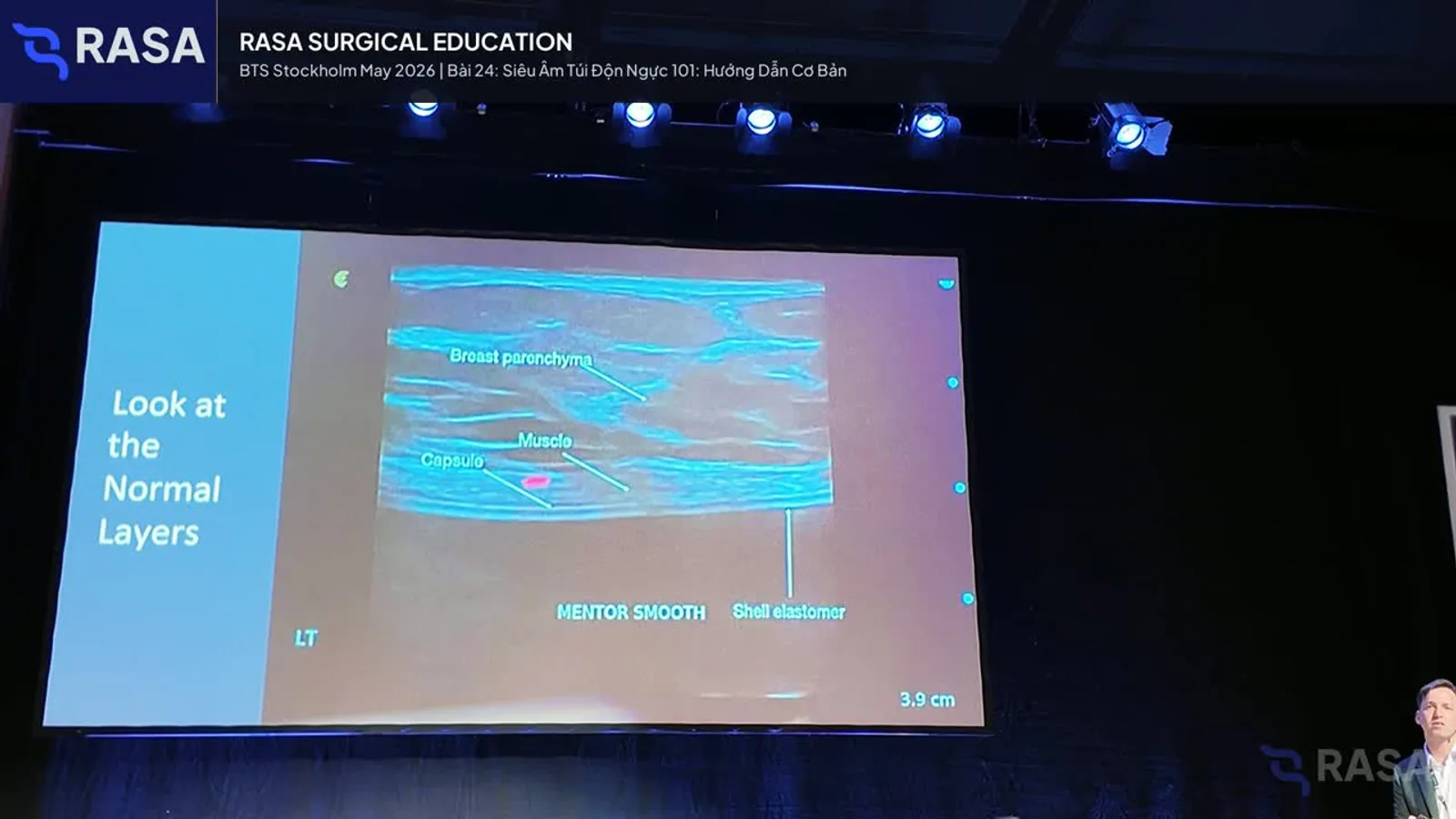
Dr. Bill Adams lecture on ultrasound follow-up and Dr. Daniel Kedar Breast Implant Ultrasound 101 emphasize office-based imaging as part of long-term quality control. Ultrasound helps standardize follow-up language between surgeon, imaging clinician and patient.
- Implant longevity should be discussed through data, symptoms and imaging, not through a rigid calendar rule.
- Rupture, capsular contracture, late fluid and explant deformity each require a separate clinical algorithm.
- Ultrasound supports follow-up, but treatment decisions still require complete clinical judgement.
7. Key surgical topics from Day 2
For academic attribution and further study, the following list summarizes the key surgical presentations from the Day 2 programme, with speaker names as listed in the Beauty Through Science Stockholm 2026 programme.
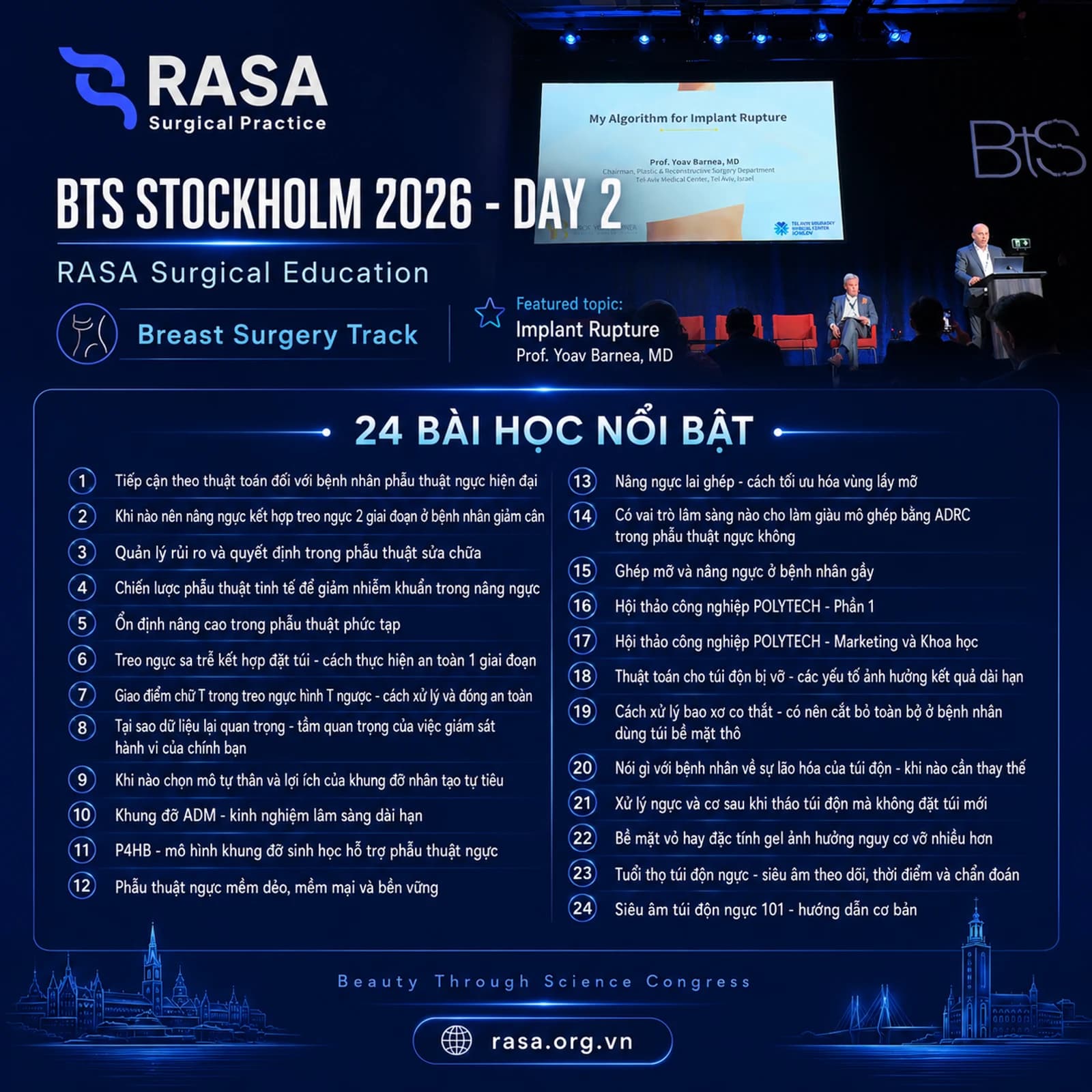
- Algorithmic Approaches to the Modern Breast Surgery Patient - Dr. Brad Calobrace.
- When to Perform Mastopexy Augmentation in 2 Stages Weight Loss Patient - Dr. Patrick Mallucci.
- Managing Risks and Decisions in Revision Surgeries - Dr. Wouter van der Pot.
- Beyond the Basics: Subtle Surgical Strategies to Reduce Contamination in Breast Augmentation - Dr. Paolo Montemurro.
- Advanced Stabilization in Complex Surgeries - Dr. Wouter van der Pot.
- Combination of Implants and Mastopexy: Limitations and Risks, How to Perform a Safe Mastopexy Augmentation in One Stage - Dr. Roy de Vita.
- The T-Junction in Inverted T-Mastopexy Augmentations - Dr. Brad Calobrace.
- When Biology and Anatomy Lead: Tissue Preservation in Primary, Hybrid, and Mastopexy Augmentation - Dr. Marie Jaeger and Dr. Wouter van der Pot.
- Scaffolds in Breast Surgery: autologous support tissue, ADM, P4HB and durable soft results - Dr. Bill Adams, Dr. Yoav Barnea, Dr. Brad Calobrace and Dr. Per Hedén.
- Hybrid breast augmentation, ADRC enrichment and fat grafting in skinny patients - Dr. Mario Mendanha, Dr. Per Hedén and Dr. Bill Adams.
- Understanding the POLYTECH Journey - Dr. Paolo Montemurro, Dr. Patrick Mallucci and Dr. Roy de Vita.
- Implant longevity, rupture, capsular contracture, explantation and ultrasound follow-up - Dr. Yoav Barnea, Dr. Marie Jaeger, Dr. Roy de Vita, Dr. Patrick Mallucci, Dr. Birgit Stark, Dr. Bill Adams and Dr. Daniel Kedar.
Source material and usage limits
This article is based on Beauty Through Science Stockholm 2026, Day 2 Surgical Program, held at Stockholm Waterfront Congress Centre on 29 May 2026. The event is organized by Akademikliniken, with Dr. Per Hedén as Chairman of Beauty Through Science.
This overview references Day 2 presentations by Dr. Brad Calobrace, Dr. Patrick Mallucci, Dr. Wouter van der Pot, Dr. Paolo Montemurro, Dr. Marie Jaeger, Dr. Bill Adams, Dr. Roy de Vita, Dr. Per Hedén, Dr. Mario Mendanha, Dr. Yoav Barnea, Dr. Birgit Stark and Dr. Daniel Kedar. Presentation and speaker names are included for academic attribution, not to republish the full programme content.
The website video is an edited visual summary for RASA academic knowledge sharing. It is intended for professional reference only and does not replace direct consultation, individualized medical indication or hands-on surgical training.