Lecture note
A scientific brief from Day 1 of Beauty Through Science Stockholm 2026, with clinical analysis of high-definition liposuction, body contouring complications, deep-plane facelift, neck anatomy and artificial intelligence in aesthetic surgical practice.
1. A scientific map of the first working day
The first working day of Beauty Through Science Stockholm 2026 should not be read as a set of isolated clinical talks. When body contouring, facial surgery, energy-based technology and data workflow are placed side by side, the programme reveals a coherent axis: modern aesthetic surgery requires disciplined anatomical analysis, individualized indication, technological literacy and proactive complication control.
The event is organized by Akademikliniken, with Dr. Per Hedén as Chairman of Beauty Through Science. Day 1 brings together leading surgical faculty including Dr. Jordi Mir, Dr. Mario Mendanha, Dr. Alessandro Gualdi, Dr. Dario Bertossi, Dr. Ariel Tessone and Dr. Artin Entezarjou. Dr. Jordi Mir is a key voice in the body contouring block, especially across complications, tissue tightening and RIP fractionation.
From the clinical perspective of RASA Surgical Practice, Day 1 is best understood as a masterclass in aesthetic surgical judgement. Body contouring asks how contour, energy and tissue safety can coexist. Facial surgery asks how anatomy, vector and regional harmony should guide planning. Chemical peel, energy-based devices and artificial intelligence extend the discussion toward skin quality, clinical data and standardized practice.
2. Body contouring: aesthetic definition and the limits of surgical safety
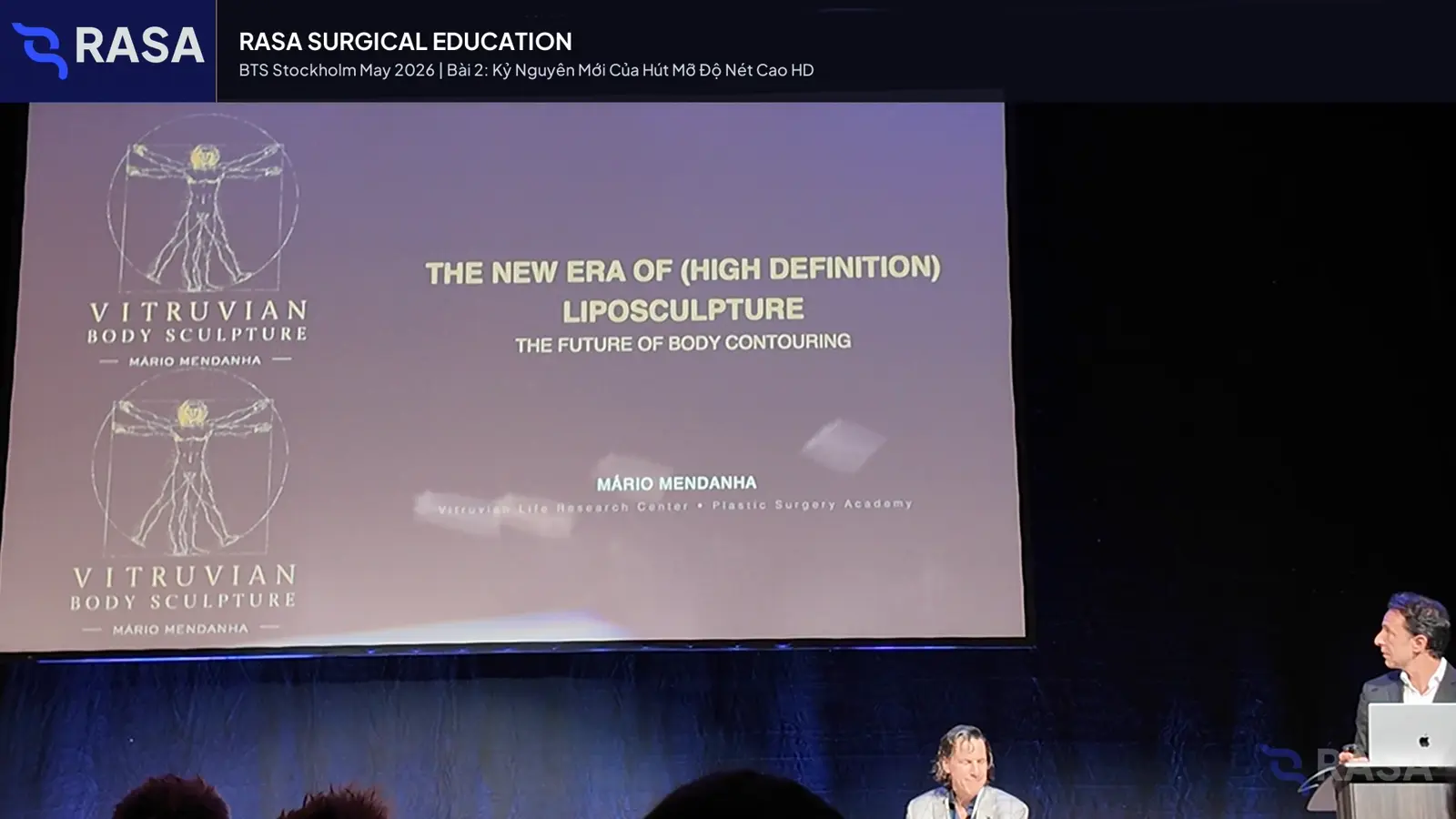
The body contouring block moves from high-definition liposuction and RIP fractionation to complication management, tissue tightening and ultrasound-based technology. The shared lesson is not to make contours more aggressive, but to control tissue plane, delivered energy, superficial tissue coverage and patient expectations.
High-definition liposuction should be read as a three-dimensional sculpting strategy, not as a surface effect. A beautiful contour can never justify broad fibrosis, asymmetry, thermal injury, tissue necrosis or poor indication.
Ultrasound technology and body-tightening devices only become valuable when the surgeon understands how energy acts on each tissue layer. Devices are tools for optimization, not protection against weak clinical judgement.
- Treatment planning begins with body shape, soft-tissue thickness, skin quality and transition zones.
- Complications often come from indication, tissue plane, energy use, postoperative care and unrealistic expectations.
- Ultrasound technology and body tightening are support tools, not guarantees of result.
3. Facial rejuvenation surgery: from deep-plane technique to regional harmony
The facial surgery block opens with a keynote lecture on refinements in deep-plane facelift, then moves through periorbital planning, eyebrow repositioning, neck deformity analysis and rhinoplasty combined with other facial aesthetic procedures.
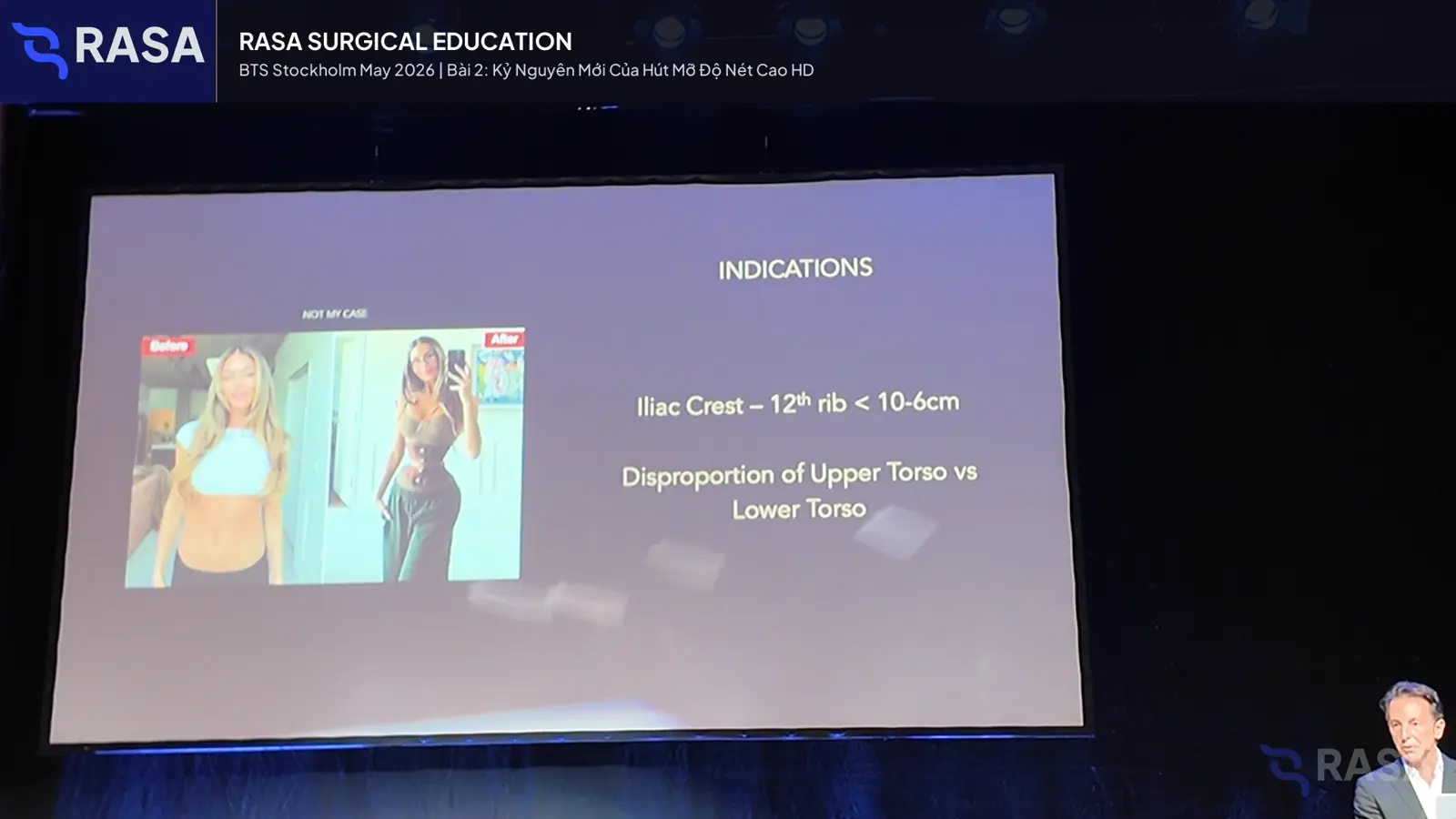
Deep-plane facelift should not be reduced to a technique label. Its academic value lies in correctly identifying the dissection plane beneath the superficial musculoaponeurotic system, releasing retaining ligaments safely, preserving facial nerve branches and restoring a natural lifting vector.
The same regional logic applies to periorbital rejuvenation and combined rhinoplasty. Eyelids, eyebrow position, malar support, chin projection and perioral soft tissue all influence whether a facial procedure looks anatomically coherent or isolated.
- Deep plane facelift should be learned through anatomy and vector, not through a name alone.
- Periorbital and eyebrow planning must be read in relation to the whole facial frame.
- Neck analysis requires identifying the responsible structure before choosing the intervention.
4. Neck analysis and contouring: structural diagnosis before intervention
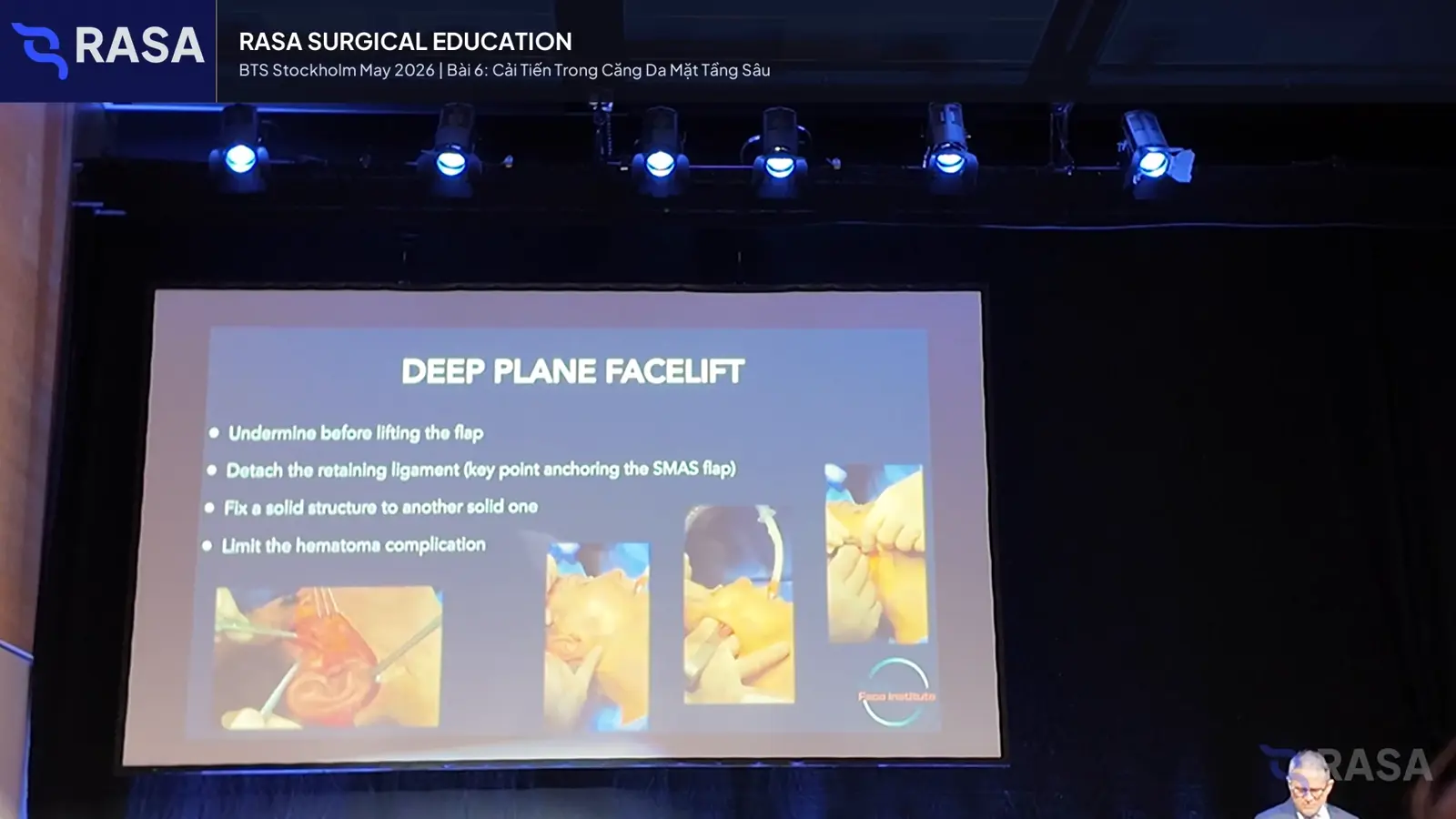
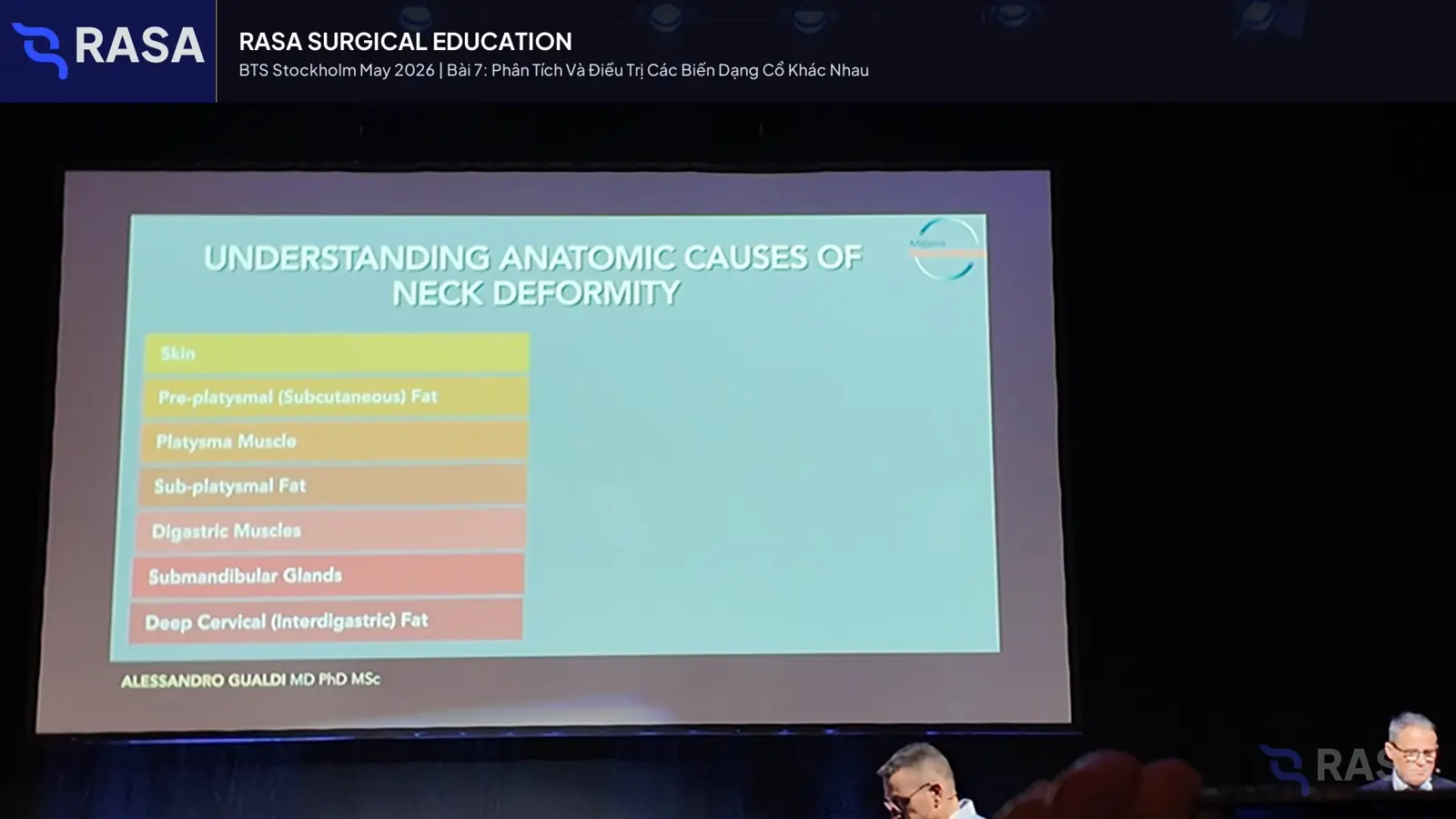
In Dr. Alessandro Gualdi’s lecture “How to Analyse and Treat Different Neck Deformity”, the key lesson is not a single maneuver. It is the ability to break the neck into clinically meaningful layers before choosing an intervention.
A weak mandibular border or a heavy neck may come from subcutaneous fat, platysmal laxity, subplatysmal fat, the submandibular gland, the digastric muscle or the deep cervical fascia. Without structural diagnosis, treatment easily becomes habitual skin pulling or liposuction.
Over-aggressive liposuction can create surface irregularity or expose platysmal bands. Deep intervention without the right indication can add unnecessary risk. Skin-only treatment may fail when the main problem is structural and deep.
5. Multimodal planning: chemical peel, energy-based devices and combined rhinoplasty
The programme also discusses how chemical peel and energy-based devices should be integrated with facial rejuvenation surgery. The issue is not whether to add another procedure, but when tissue healing, energy delivery and flap vascularity make the combination reasonable.
Chemical peel, laser, radiofrequency and ultrasound-based devices all affect dermal collagen through different mechanisms. If poorly timed with wide surgical dissection, they may increase the risk of flap ischemia or epidermal injury.
The keynote on combined rhinoplasty reinforces that the nose does not exist alone. Chin projection, cheek volume, periorbital support and perioral soft-tissue laxity determine whether the final result appears harmonious rather than regionally isolated.
6. Artificial intelligence assistant: data support and clinical standardization
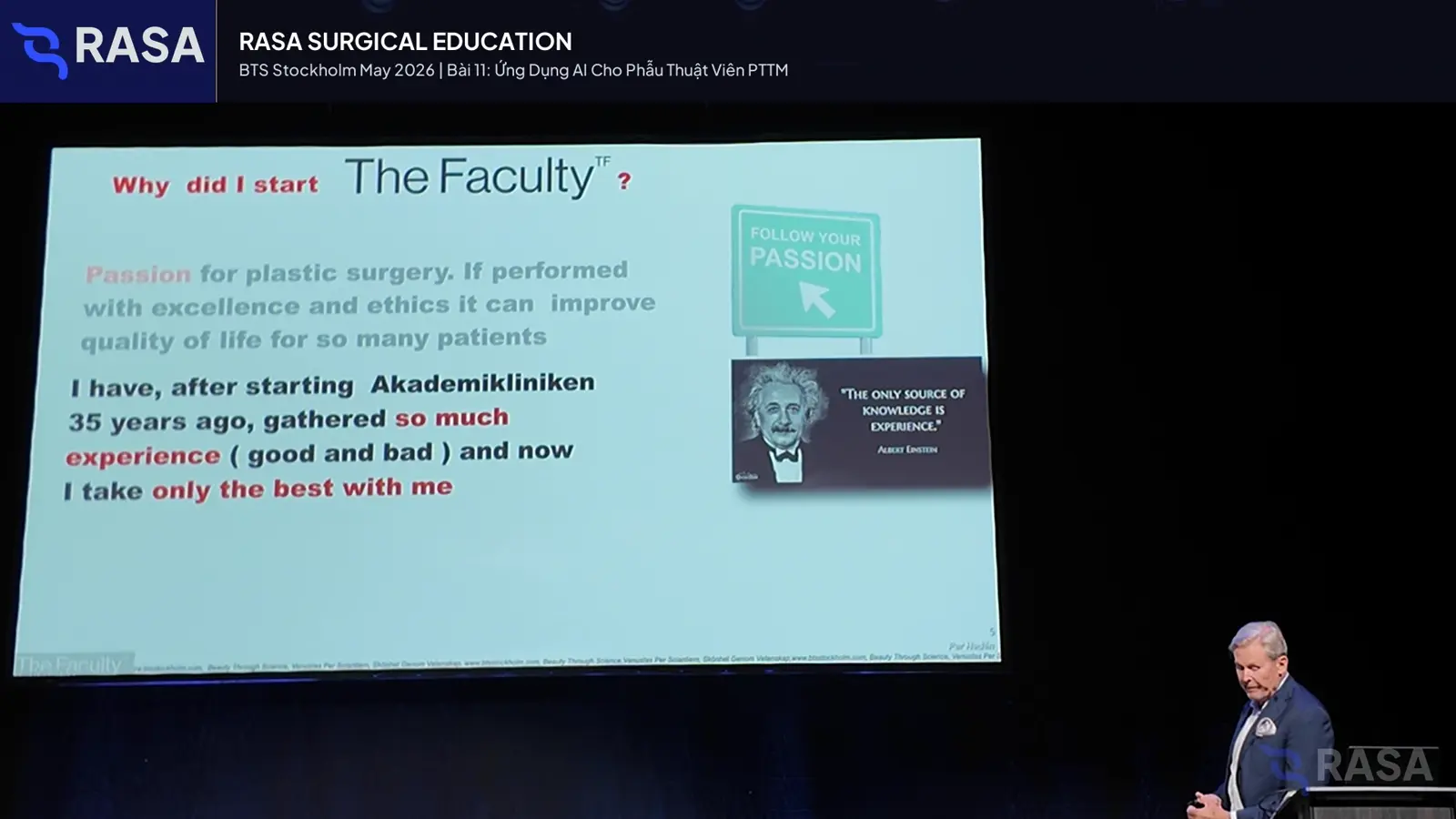
The lecture by Dr. Per Hedén and Dr. Artin Entezarjou on artificial intelligence assistants shifts the discussion toward medical records, standardized clinical photography and support for implant selection.
Surgical quality is not limited to the operating step. It also depends on traceable documentation, comparable before-and-after images, organized records and consistent decision-making. At this level, artificial intelligence may support data analysis, parameter suggestion and structured recall.
Artificial intelligence remains a support layer for data and quality control. It cannot replace clinical judgement, medical responsibility or the final decision of the surgeon for an individual patient.
7. The 11 scientific topics from Day 1
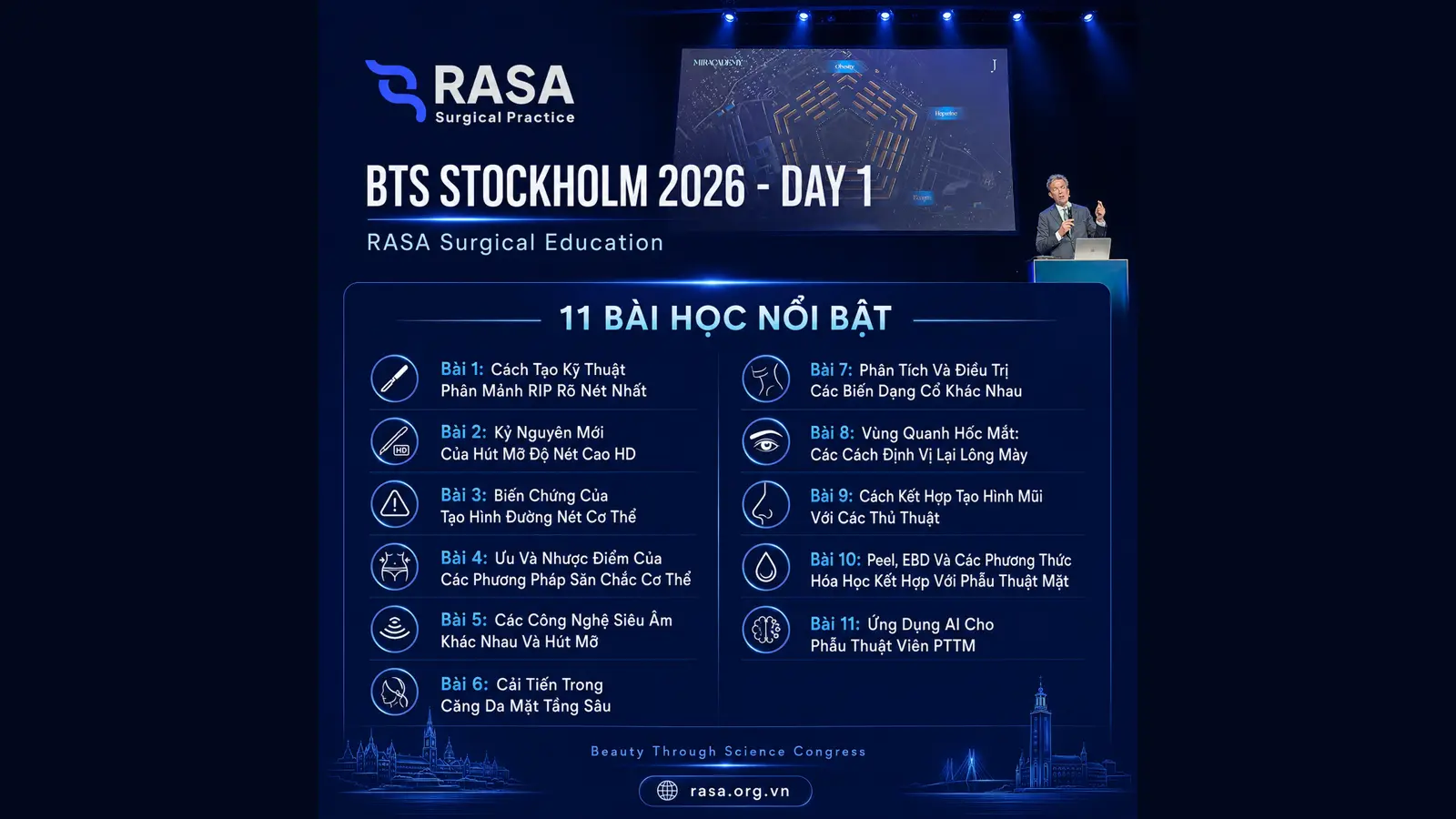
For academic attribution and further study, the following list summarizes the key scientific presentations from the Day 1 surgical programme, with speaker names as listed in the Beauty Through Science Stockholm 2026 programme.
- How to Create the Most Pronounced Ways of RIP Fractionation Techniques - Dr. Jordi Mir.
- The New Era of High Definition Liposuction - Dr. Mario Mendanha.
- Complications in Body Contouring - Dr. Jordi Mir.
- Pros & Cons of Different Body Tightening Procedures - Dr. Jordi Mir.
- Different Ultrasound Technologies & Fat Grafting - Dr. Mario Mendanha.
- Modification of Deep Plane Face Lifting - Keynote Lecture - Dr. Alessandro Gualdi.
- How to Analyse and Treat Different Neck Deformity - Dr. Alessandro Gualdi.
- Periorbital Area - Different Ways of Doing Eyebrow Repositioning - Dr. Per Hedén.
- How to Combine Rhinoplasty with Other Facial Surgical Procedures - Keynote Lecture - Dr. Dario Bertossi.
- Peeling, EBD and Different Chemical Modalities in Combination with Facial Surgery - Dr. Ariel Tessone.
- AI assistant writing medical records, tracking patient pictures and helping select ideal breast implant - Dr. Per Hedén and Dr. Artin Entezarjou.
Source material and usage limits
This article is based on Beauty Through Science Stockholm 2026, Day 1 Surgical Program, held at Stockholm Waterfront Congress Centre on 28 May 2026. The event is organized by Akademikliniken, with Dr. Per Hedén as Chairman of Beauty Through Science. Topics were cross-checked against the event programme, conference video records and RASA Surgical Practice academic notes.
This overview references Day 1 scientific presentations by Dr. Jordi Mir, Dr. Mario Mendanha, Dr. Alessandro Gualdi, Dr. Per Hedén, Dr. Dario Bertossi, Dr. Ariel Tessone and Dr. Artin Entezarjou. Presentation and speaker names are included for academic attribution, not to republish the full programme content.
The website video is an edited visual summary for RASA academic knowledge sharing. It is intended for professional reference only and does not replace direct consultation, individualized medical indication or hands-on surgical training.