Lecture note
An academic note from the Allergan Medical Institute APAC and MEA Faculty Summit 2025 on why modern aesthetic education must begin with anatomy, expectation-setting and indication discipline.
1. Why a faculty summit matters
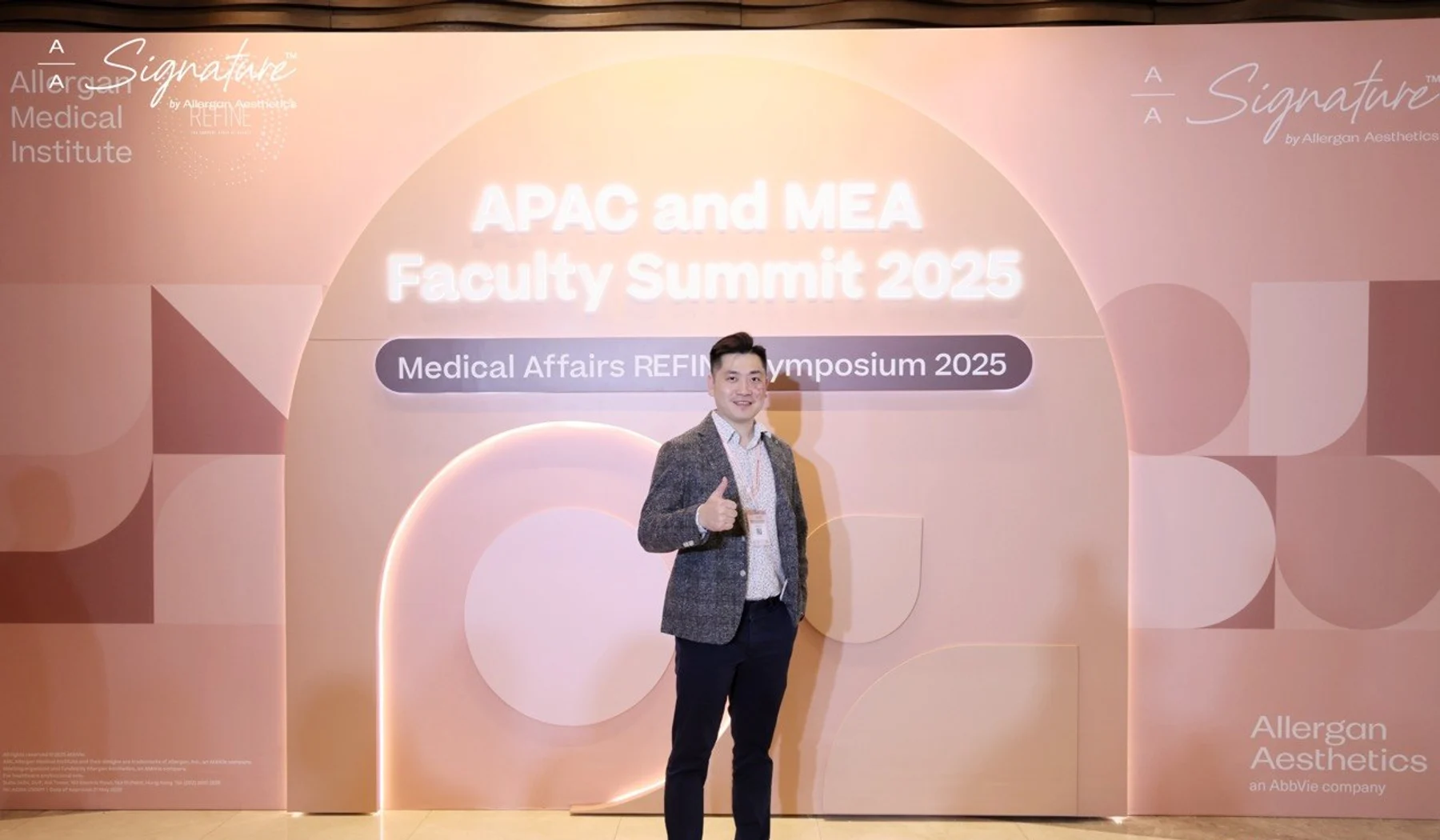
The Allergan Medical Institute APAC and MEA Faculty Summit 2025 was a professional education setting for physicians and faculty across APAC, the Middle East and North Africa. Its value lies not in isolated technical updates, but in placing aesthetic practice within anatomy, indication discipline and safety control.
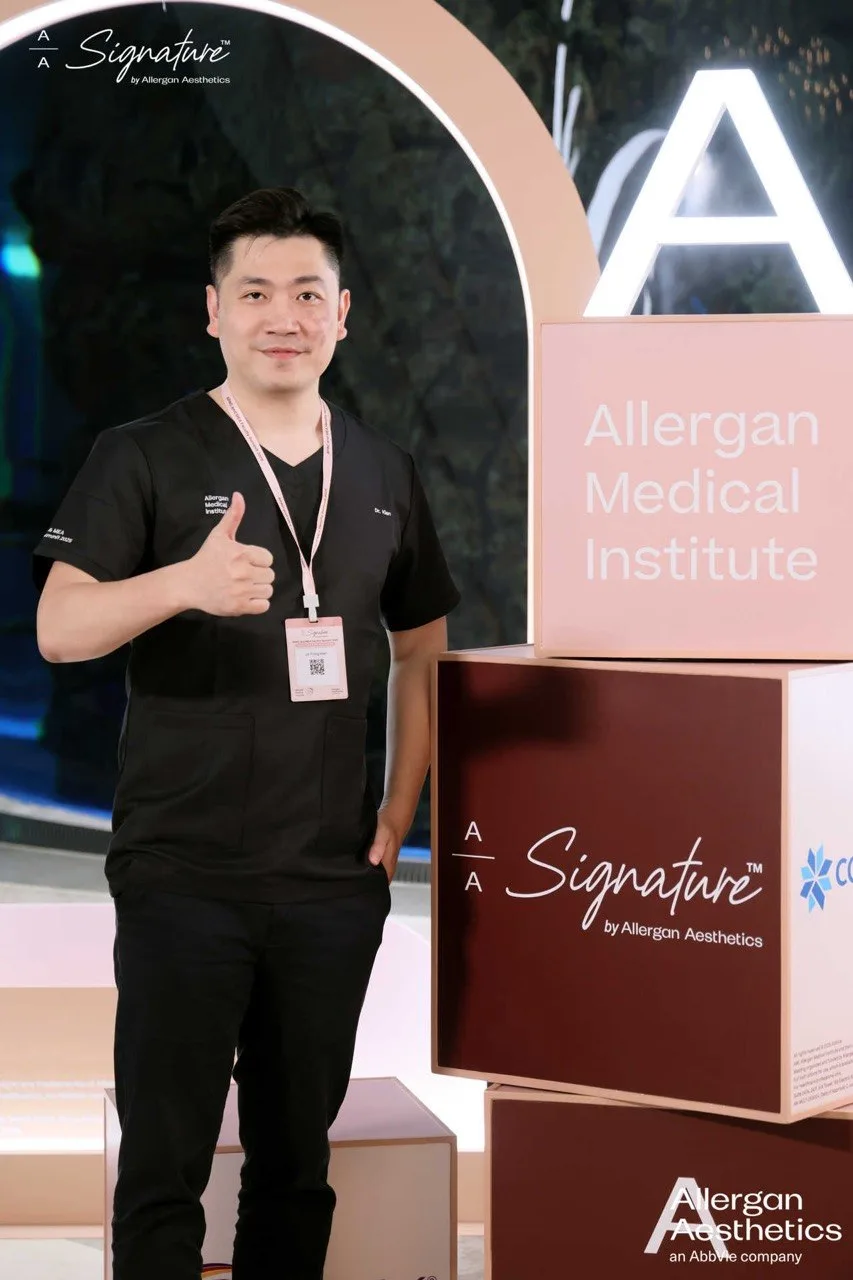
For Dr. Le Trung Kien, the REFINE Symposium matters because it brings international topics back to clinical language: soft-tissue structure, tissue behaviour, facial dynamics, regional differences and the responsibility of expectation-setting.
2. REFINE begins with anatomy
The selected video excerpt focuses on anatomy education. In aesthetic practice, the physician cannot only look at skin, wrinkles, grooves or apparent volume loss. Beneath the surface are soft tissue layers, muscles, retaining structures, vessels and risk zones.
The idea of seeing through the surface is clinically important. A visible line may reflect muscle activity, volume loss, tissue descent, skin quality or several factors together. Treating only the visible sign can lead to excessive or poorly indicated intervention.
3. Indication and communication are part of safety
The programme agenda also included topics such as overfilled syndrome, fear of HA fillers, patient education, multimodality needs and long-term value. These topics place technique inside a broader clinical responsibility.
Many unsatisfactory outcomes do not begin with a technical error alone. They often begin with poorly aligned expectations. Clear professional communication is therefore a safety structure, not a soft extra.

4. From international update to RASA clinical thinking
From the perspective of RASA Surgical Education, the value of an international programme is not to name another technique, but to translate education into better structure reading, indication judgement and safety boundaries.
International updates are valuable only when translated into disciplined local practice: which techniques have a foundation, which indications fit Vietnamese patients, which risks must be discussed and which expectations need adjustment.
5. Video excerpt: anatomy education and interpretation limits
The Anatomy Education excerpt shows how contemporary aesthetic thinking moves from the visible surface to the structures underneath. A hollow, wrinkle or apparent volume deficit may arise from muscle activity, tissue support loss, skin quality change or several mechanisms at once.
Its academic value is the discipline of identifying cause before selecting method. If the physician only treats the surface sign, intervention can become excessive, poorly layered or incomplete. When the structure is understood, indication and expectation-setting become more precise.
The excerpt should therefore be read as an entry point into anatomical thinking, not as a treatment protocol. Each face still requires direct assessment of tissue layers, previous procedures, risk zones, expectation and follow-up capacity.
6. Why AMI should not be reduced to a product name
A common risk in aesthetic education content is reducing a professional programme to a brand or product mention. That is too narrow. Allergan Medical Institute is an education context where product knowledge, anatomy, safety and communication have to sit together.
For RASA, the lesson is not to use any product more aggressively. The lesson is to improve indication judgement: when to treat, when to pause, when to combine modalities and when patient expectations need to be brought back to biological limits.
When AMI is read as an education system, the central question is no longer what to use, but why to use it, for whom, in which layer, toward which goal and where the stopping point should be.
Source material and usage limits
This article is based on selected material from the Allergan Medical Institute APAC and MEA Faculty Summit 2025, Medical Affairs REFINE Symposium in Hong Kong, combined with RASA Surgical Practice academic interpretation.
It is intended for professional education and does not replace direct consultation. Any aesthetic treatment decision must be individualized after clinical assessment by an appropriately qualified physician.