

Not More Beautiful. More Correct.
Author
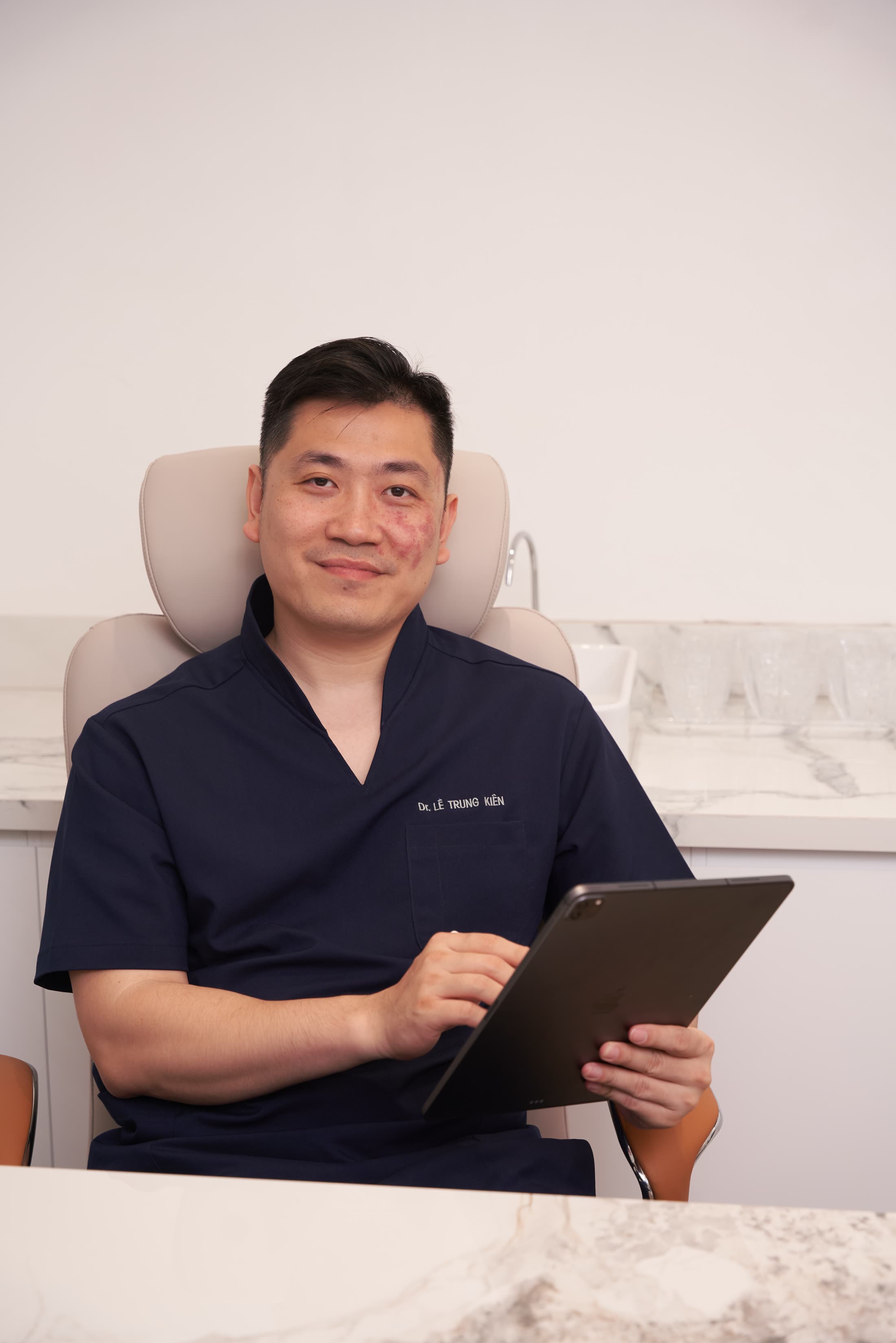
Dr. Le Trung Kien
RASA Surgical Practice
"The truth about anatomy, proportion and long-term balance in aesthetic surgery."
THINKING AND PHILOSOPHY OF SURGERY
There is a pattern I have seen repeatedly in my consultation room over many years. A patient sits down, opens their phone, shows me a photograph and says they want a nose, a pair of eyes, or a jawline exactly like the person on the screen.
Sometimes it is an actor. Sometimes it is an influencer. Sometimes it is even a photograph of themselves, filtered until every pore has disappeared and every contour has been reshaped. They look at me with hope and wait for me to nod.
In those moments, I often stay silent for a while. Not because I am calculating an incision angle or a surgical method. I stay silent because I am trying to express a medical truth without injuring a very legitimate desire.
That truth is simple: the idea of beauty they are bringing to me is borrowed.
They are borrowing the beauty of another bone structure, another genetic foundation, another lighting condition, and sometimes an entire digital edit, then trying to place it onto their own body. If I agree too easily, I may give them a result that impresses people today, but I may also take away something far more important: their originality.
Anatomy, proportion and long-term balance in aesthetic surgery
The trap of dramatic transformation
We live in an era in which aesthetic surgery is often promoted as a miracle of transformation. Media repeatedly celebrates operations that turn an ugly duckling into a swan, stories of dramatic facial change designed to capture attention.
This culture of transformation has planted a misleading belief: that the value of an operation lies in how much change it creates. Patients begin to believe that the more different they look from the past, the more successful the surgery must be.
From the perspective of reconstructive medicine and anatomy-based aesthetic philosophy, however, dramatic change often carries costs that deserve serious consideration.
A nose raised too high for the native midface may appear sharper in profile photographs, but it can also disturb visual harmony, increase tension on the skin, and in some cases affect airway function. A face reduced too aggressively to achieve a V-line may look delicate at a very young age, but it can weaken soft-tissue support and reveal a higher risk of sagging as the body ages.
Change pursued only for attention is a short-term game. The human body has its own biological limits. Whenever we force the body beyond those limits to satisfy an external aesthetic standard, the body may eventually express those limits through complications, artificiality, or the need for revision.
The RASA standard: refinement guided by anatomy
At RASA Reconstructive and Aesthetic Surgery Alliance, we set a different standard for ourselves and for our patients. We call it The Aesthetic Standard.
At its core is a clear statement: aesthetic surgery is not transformation for attention, but refinement guided by anatomy, proportion and long-term balance.
We do not measure success by how different a patient looks. We measure success by how harmonious, stable and true to their own foundation the result becomes.
Correct is a more scientifically grounded concept than beautiful. It cannot be separated from anatomy, proportion, tissue function and long-term harmony.
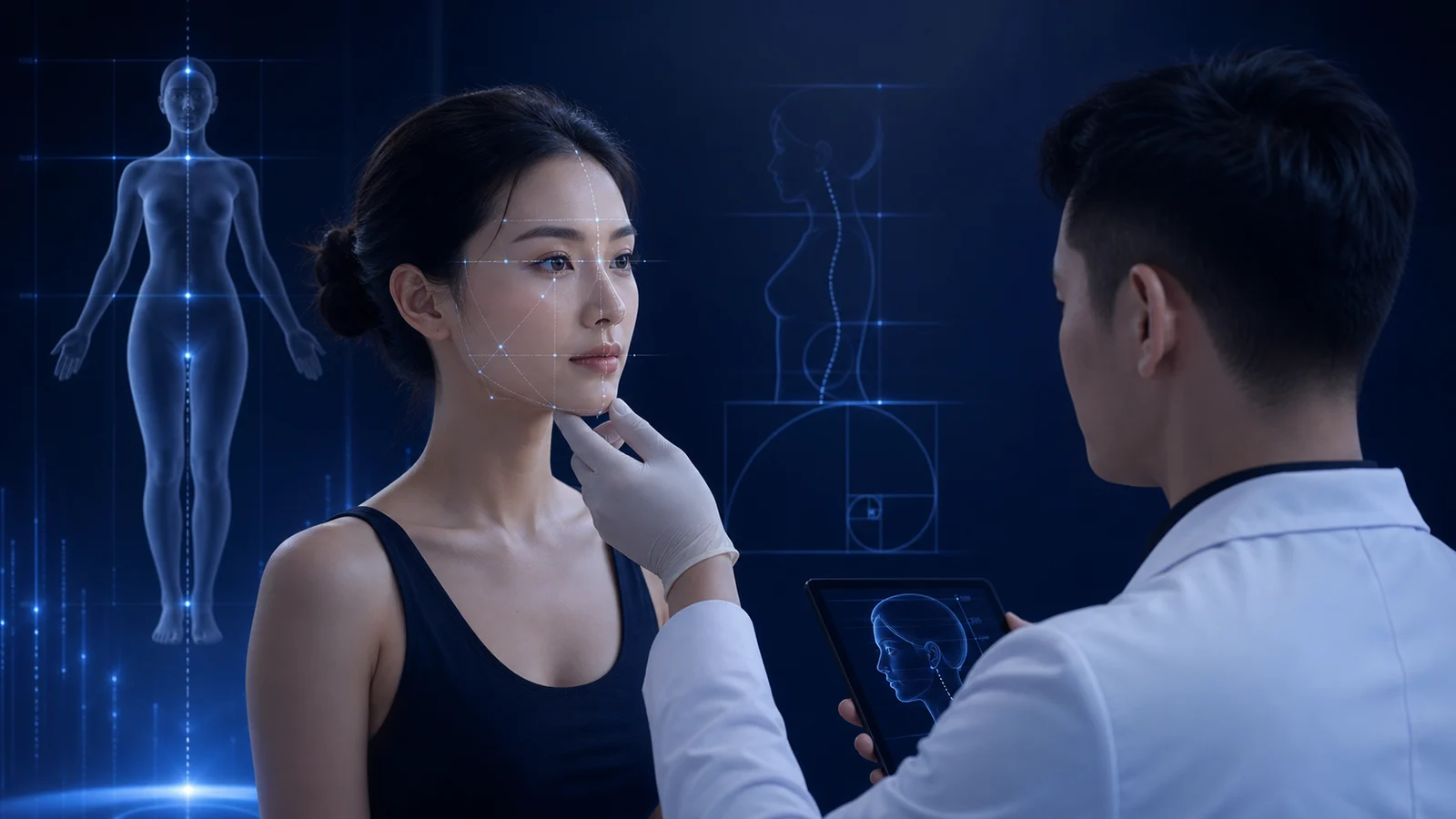
Anatomical correctness means respecting the native foundation. When I perform body sculpting or facial contouring, I am not painting a new picture on a blank sheet. I am closer to an archaeologist. I search for the original lines that have been hidden by excess fat, aging or volume imbalance. Tissue dissection and volume redistribution must respect the neural network, lymphatic system and mechanical tension of the fascia.
Proportional correctness means that every millimeter changed in one area must be calculated in relation to another. Beautiful eyes do not exist in isolation. They are beautiful only when eyelid height, brow position and cheekbone axis sit within a balanced proportional equation. We are not attaching separate parts to a body. We are restoring coherence.
The test of time
One of the most important pillars of The Aesthetic Standard at RASA is that every intervention must be evaluated beyond the immediate result.
An operation ends when the surgeon places the final suture. For the patient, however, the journey has only begun. Skin will contract, scars will form and soften, transferred fat may partially resorb, and bone and soft tissue will continue to change with age. Human tissue is a living system that adapts continuously, not a static block of clay.
A design focused only on immediate beauty will soon reveal weaknesses as the body moves through physiological aging. A correct design from the beginning is one that can age more gracefully with the body.
Respecting anatomy helps us avoid placing excessive tension on tissue structures. It reduces the risk of chronic complications and protects patients from the cycle of repeated corrective surgery.

Returning to oneself through an anatomy-based aesthetic philosophy
Returning to oneself
Beyond the technical aspects of medicine, the strongest reason I remain committed to this philosophy is the psychology of the patient.
I have met many people who carry a face considered beautiful by popular entertainment standards, yet sit in front of me with a deep sadness. They say that each morning, when they look in the mirror, they no longer recognize themselves. They feel as if they are wearing a coat that is too large, living in a shell that does not truly belong to them.
Aesthetic surgery should not be a tool for erasing identity. The uniqueness of a person sometimes comes from small asymmetries that nature has left behind. Our task is not to flatten every difference and produce identical people from a production line.
When every decision is designed with precision and performed with discipline and medical ethics, the result is not only a harmonious proportion. It is the relief of putting down borrowed expectations. It is the moment a patient looks in the mirror, sees a refreshed and balanced version of themselves, and can still smile and say: I am still me.
That is not a transformation. It is a return.
And for me, that is where evidence-based medicine and the art of shaping form meet their deepest purpose. The value is not to make people shine at any cost, but to help them become more correct, more stable and more at peace within their own body.
Professional note: This article is intended to provide medical information and professional perspective. It does not replace direct examination, diagnosis or individualized treatment indication. Each case should be assessed directly by a specialist before any intervention is considered.