
Aesthetic Surgery Is No Longer Only for the Wealthy
Author
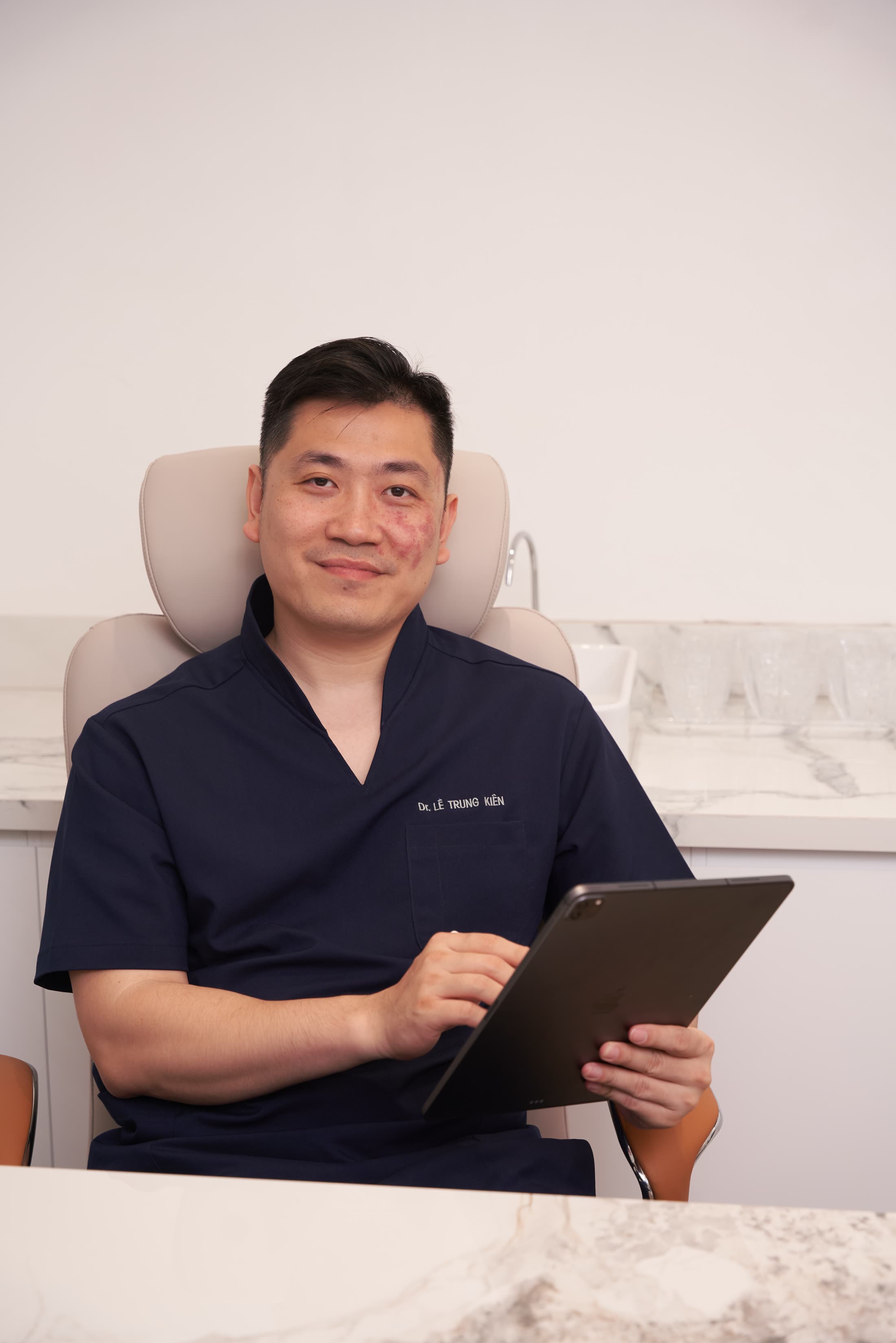
Dr. Le Trung Kien
RASA Surgical Practice
"The modern reality of aesthetic surgery is broader and more human than the old stereotype of luxury, vanity and unattainable cost."
There's an image that has taken root in the minds of many people when they hear about cosmetic surgery: a wealthy woman, a luxurious clinic, and astronomical costs that are far beyond the reach of ordinary people. That image isn't entirely wrong for the pre-2000 era. But it's become severely outdated.
In 2024, the global cosmetic surgery market reached 83 billion USD and is on track to reach 195 billion USD by 2033. That growth rate isn't coming from the ultra-rich, because even the wealthiest individuals have limited numbers. It's coming from the middle class, who for the first time in history have the ability to access something that was previously reserved for the upper class.
This isn't just a story about the beauty industry. It's a story about how society is redistributing a unique social capital, and the unforeseen consequences of that redistribution.
Data: Who's really using cosmetic surgery,
According to the 2023 report, around 24% of Americans have undergone at least one cosmetic procedure. This is no longer a number for the wealthy minority. Out of every 4 adults, nearly 1 has undergone some form of cosmetic intervention, from Botox to rhinoplasty.
However, a more interesting figure lies in the income structure. The group with an annual income of over $150,000 has 40% used at least one cosmetic procedure, higher than the average but not to the extent of creating an absolute gap. In other words, the difference between the wealthy and the middle class in accessing beauty is rapidly narrowing.
According to ISAPS, there were over 37.9 million cosmetic procedures performed globally in 2024, a 42.5% increase from just four years ago. Botox alone accounted for 7.8 million cases among plastic surgeons, not to mention millions of other cases from other facilities. In the US, there were nearly 25.4 million minimally invasive procedures performed in 2023, a figure that cannot be called a privilege of the wealthy.
83 billion$
Market size in 2024
projected to rise to $195 billion by 2033
37.9 trillion
Plastic Surgery Procedures in 2024
increased by 42.5% in just 4 years - ISAPS
42%
Patients using financing in 2023
installment payment, health card, personal loan
More importantly, the procedure structure: 66% of all aesthetic procedures in 2023 were minimally invasive, including Botox, fillers, laser, and chemical peels. These can be performed at outpatient clinics, without hospitalization, and cost from a few million to tens of millions of dong per session, a price that urban middle-class individuals can easily afford.
Financial Revolution: When installment payments become available at aesthetic clinics
The factor that has changed the landscape the most is not technology. It is consumer finance.
In the US, healthcare financing options like CareCredit (accepted at over 285,000 healthcare facilities), PatientFi, and in-house installment payment programs of clinics have turned aesthetic surgery from a one-time payment into a monthly expense. In 2023, approximately 42% of aesthetic patients used at least one financing option to pay for their procedures, spanning 6 to 60 months.
From 2018 to 2022, the level of healthcare financing in aesthetics increased by 35%. When clinics integrated packages with 0% interest rates during promotional periods, the average value of a procedure rose from approximately 4,000 USD to 6,500 USD, as patients were no longer limited by the amount of money available in their accounts but by the amount they could afford to pay each month.

Phẫu thuật thẩm mỹ trong logic đầu tư của tầng lớp trung lưu
In Vietnam and many Asian countries, similar mechanisms are forming in various forms: paying through credit cards, splitting payments over multiple installments, or even annual service packages for maintenance procedures like Botox. The underlying logic is identical: turning large costs into small, regular income streams.
FORMS OF FINANCING CURRENTLY DEMOCRATIZING AESTHETICS
• Medical credit card (CareCredit, PatientFi): 0% APR during 12-24 month promotional periods, approved within a few minutes
• Personal loans for aesthetic purposes: from 5,000 to 50,000 USD, interest rates ranging from 7-25% depending on credit score, repayment terms up to 84 months
• In-house payment plans: usually do not require credit checks, most flexible for patients with low credit scores
• Buy Now Pay Later (BNPL): Affirm, Klarna are currently testing in some medical aesthetic markets
• Annual subscription packages for maintenance procedures: monthly fees, receive Botox and fillers according to a regular schedule
""When you can afford $200 a month for 18 months, a $2,000 Botox procedure suddenly doesn't seem so far off. That's when the aesthetic market really changes."
Investment logic: why the middle class calculates differently from the wealthy
The wealthy can access cosmetic surgery as a luxury product, similar to expensive watches or high-end vacations. They buy because they want to and because they can. The middle class approaches beauty in a completely different way: as an investment decision with expectations of returns.
This connection is not mine to make. It is documented in academic research. Many beauty patients, particularly in developing economies, describe their surgical decisions clearly in the language of investment: 'surgery leads to advancement,' 'investing in appearance to compete in one's profession.' This is not a fabricated excuse, but rather a living logic from those who understand their labor market.
That logic is not unreasonable when looking at data from the first article in this series: individuals with more attractive appearances earn an average of $2,508 per year more and have a 52.4% higher chance of achieving a respected position after 15 years. If a cosmetic intervention costs $3,000 to $5,000 but significantly increases the likelihood of being hired into a higher-paying position, then from a purely financial perspective, it can be a profitable investment within a few years.
Not everyone calculates in this way consciously. However, many people are acting on this logic without calling it an 'investment'.
WHY THE MIDDLE CLASS IS ESPECIALLY SUSCEPTIBLE TO THIS LOGIC
• They have enough wealth to have a choice, but not enough to win solely on financial capital.
• They directly compete in the labor market where physical appearance has the greatest impact (services, sales, management).

Dân chủ hóa ngoại hình tạo ra cơ hội và nghịch lý mới
• They have enough knowledge to understand the concept of beauty premium but not enough assets to ignore it.
• They can access consumer financing (loans, installment payments) that the less affluent cannot.
• They are at the investment stage in their careers, a time when the ROI of any intervention is highest.
Lessons from Three Economies: Brazil, South Korea, and the US
These three countries occupy vastly different positions on the global economic map, yet they all provide evidence of the same trend: cosmetic surgery is becoming a social science tool, not just a personal choice.
Brazil is the most extreme case. A country with high income inequality, where opportunities for economic advancement through education and wealth accumulation are limited by deep-seated social structures. In this context, the body becomes one of the few assets that can be invested in and generate social returns. Researchers have noted that working-class women in Brazil turn to cosmetic surgery as a form of "bodily capital" that can compete with the "educational capital" they lack equal access to. The Brazilian government has even implemented a program to subsidize cosmetic surgery for the poor, arguing that it is a form of social equality intervention.
South Korea shows what happens when a society globalizes physical appearance at the cultural level. Research on South Korean high school students found that those who do not consider themselves high-achieving students view investing in their appearance as a strategy to compensate and compete in the job market later on. Cosmetic surgery is no longer something to be ashamed of and hidden, but rather something openly shared as evidence of proactive investment in oneself.
US shows the path of consumer finance. The clear correlation between cosmetic spending and the wealth of the top 5% in the US reveals a mimetic effect: when the upper class sets beauty standards, the middle class follows. And the healthcare finance market has made following financially feasible.
""In a highly unequal society, where social mobility demands many advantageous starting points, physical appearance is emerging as a type of capital that people can invest in, even when other forms of capital are blocked." - A study on the sociology of aesthetic surgery in Brazil
The dark side of democratization: When accessibility does not mean safety
At this point, I need to stop and say something harder to hear, because a doctor's duty is to speak the truth, not to paint a completely positive picture.
Democratizing access and democratizing quality are two different things. And in many markets, including Vietnam, the gap between the two is very large.
As demand increases but medical capacity does not keep pace, it is inevitable that the low-cost segment will explode. So-called 'beauty clinics' lacking proper sterilization conditions, lacking genuinely qualified doctors, lacking the ability to handle complications. Patients come to them because they are a third cheaper, or because they don't need paperwork, or because they were recommended by an acquaintance who also lacks the knowledge to evaluate quality.
As the middle class expands the market for aesthetic surgery, they also expand the market for facilities that exploit this lack of information. And because middle-class patients are more sensitive to price than wealthy patients, they are more easily drawn to cheaper options without fully considering the real risks.
More ironically, high-interest financing options can also trap users in even worse financial situations: a 30 million VND aesthetic surgery procedure paid off in 24 months at high interest can actually cost 40 to 45 million VND, and if complications arise requiring treatment, the total cost can bankrupt a middle-class family's budget.

Khi thẩm mỹ không còn là đặc quyền của số ít
Democratization creates opportunities
• The middle class gains access to tools for improving quality of life
• Competition increases, prices decrease, technology becomes more widespread
• The field of social stigma removal, normalization of physical appearance care
• Many people have achieved truly improved quality of life through aesthetic results
Democratization creates new risks
• The low-cost segment has exploded, with substandard facilities increasing accordingly
• Patients lack information, unable to distinguish quality
• Financial trap: high-interest installment payments for failed results
• Increased pressure to spend on beauty among those without a suitable budget
Core paradox: equalization or pressure,
I want to pose a question that I have not fully answered, and I believe honesty about that is more important than trying to provide a neat conclusion.
As cosmetic surgery becomes more widespread among the middle class, there are two entirely opposing readings that can be true at the same time.
The first point: this is a genuine democratization of a social asset. Previously, only the wealthy could access the benefits of physical appearance through intervention. Now, the middle class can too. If beauty premium is real and society still rewards physical appearance, then more people having access to the tool to respond to this is a balance, not a problem.
The second point: this widespread availability does not reduce pressure; it increases it. When beauty becomes the standard of the middle class, those who do not intervene are no longer just "losing out" to the wealthy with natural advantages or conditions, but also "losing out" to their economically equal peers who have chosen to invest in physical appearance. The baseline increases, and the competitive loop begins.
Research from many countries shows this: in societies with higher economic inequality, beauty spending across all classes increases. Not because people are wealthier, but because they are more anxious about their position and feel pressure to compete more intensely on all fronts, including physical appearance.
If that's the case, then the development of the middle-class beauty market is not the cause of pressure. It's a symptom of a society with increasing economic inequality and status competition.
""When everyone can get a nose job, the question is no longer who can. The question is who feels pressured to do it. And that's a very different question."
From the Clinic's Perspective: What I've Observed Changing
Over the years, I've noticed a clear shift in the profile of my patients.
Ten years ago, most of my patients were individuals with a good economic background, and their needs were often driven by a desire for comfort. Now, I see more people who carefully consider their budget, compare prices, ask about payment plans, and weigh the costs. They are not wealthier than my previous patients; they are the middle class seeking to invest in something they consider worthwhile.
This creates a different responsibility for doctors. With patients who have a good economic situation, the primary question is usually which procedure, what the results will look like. With middle-class patients who carefully consider their finances, the more important question is: is this really the right time to make this investment, Is the budget sufficient to do it properly, or will it be necessary to cut corners in areas that shouldn't be compromised,
I've turned down some cases not because the patients lacked medical qualifications, but because their budget wasn't sufficient to perform the procedure safely and to the necessary quality, and I didn't want to be the one pushing them into a financially burdensome decision that wouldn't meet their expectations.
That's not always an easy conversation to have. But it's the right one.
QUESTIONS TO CONSIDER BEFORE DECIDING
• Is this budget sufficient to carry out with a qualified doctor at a suitable facility,
• If complications arise, do I have sufficient financial reserves to cover them,
• What's the interest rate on my payment plan, What's the total cost, really,
• Is this the right time to spend this amount, or are there other, more pressing priorities,
• If the results are not as expected, do I have the mental and financial resources to handle it,
Conclusion: Mass Aesthetics and the Unanswered Question
Cosmetic surgery is becoming a tool of the middle class. This is a fact that cannot be denied by the data. Whether this is good or bad depends on many factors that no one can control alone.
It's good if accompanied by: complete information about the risks and realistic limitations of each procedure, a suitable budget to do it properly, a doctor with sufficient expertise and sufficient medical ethics to refuse when necessary, and a decision made by a self-sufficient individual rather than one driven by social pressure internalized.
Beauty surgery is no longer a privilege of the wealthy if it comes with: financialization of beauty that guides people to overspend beyond their means, a cheap market that exploits lack of information, and a vicious cycle of escalating pressure for physical appearance that's akin to an arms race with no one truly winning.
The beauty industry is increasingly becoming accessible to the masses, and that's not something that can or should be reversed. However, how this industry expands, who benefits, and who takes the risks, depends on the decisions of multiple parties: managers, doctors, service providers, and consumers.
In my opinion, the most important role of a plastic surgeon in this era of democratization is not to perform more surgeries. Rather, it's to be a responsible witness to important decisions and to have the courage to say no when it's not the right time.
""Democratization of beauty is not a threat to the industry. It's the biggest challenge the industry faces, a challenge to see if we're responsible enough to the masses." - Dr. CKII Lê Trung Kiên
Dr. CKII Lê Trung Kiên
Plastic Surgeon II. Many years of clinical practice and research on the intersection of aesthetic medicine, psychology, and social factors influencing patients' decision to undergo intervention.
Next article in the series: "Men and Aesthetics: The Silent Market and Reasons Nobody Speaks Out."