
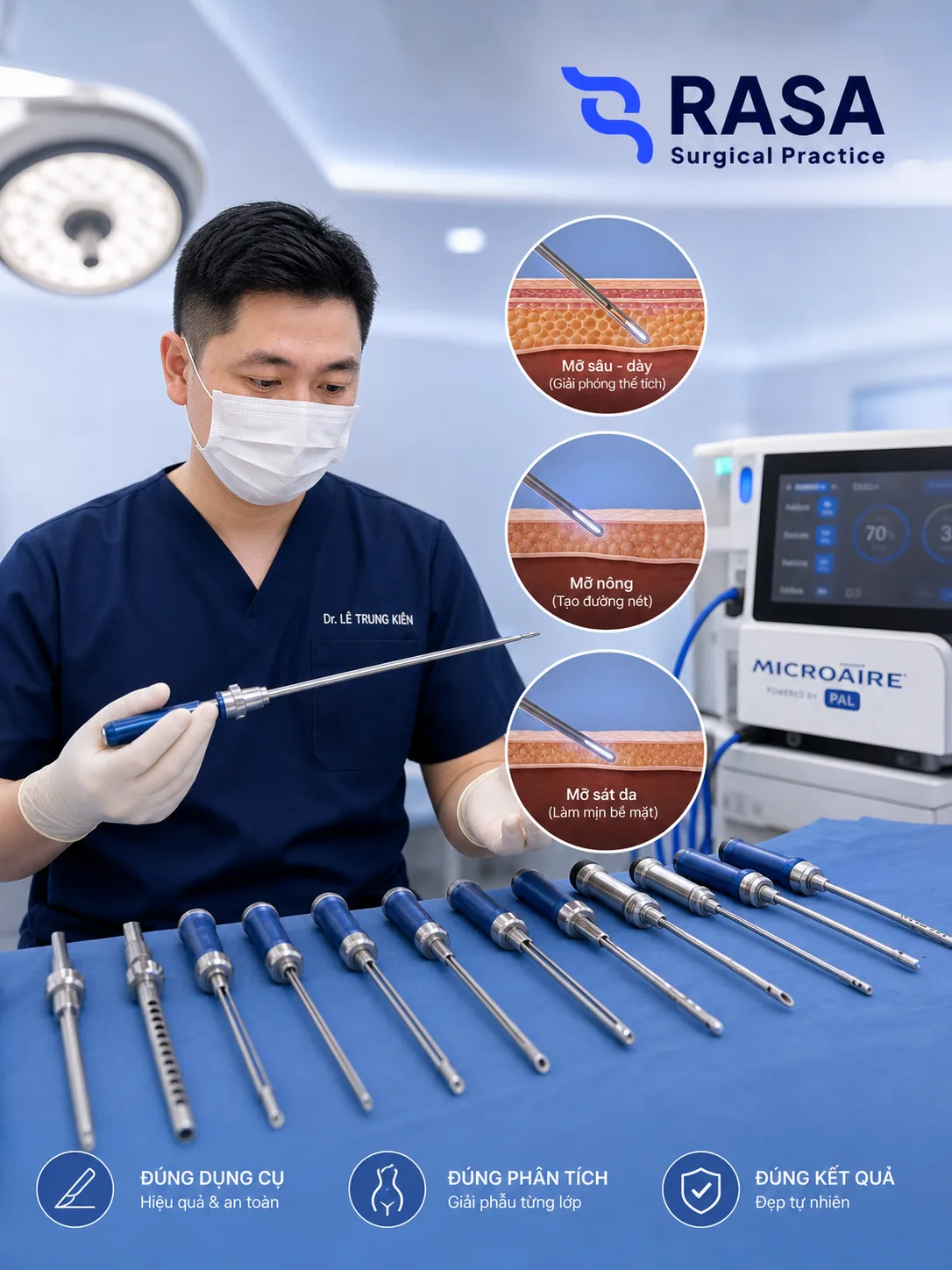
Choosing the Right Cannula in Body Contouring
Author
Dr. Le Trung Kien
RASA Surgical Practice
"In modern body contouring, the cannula is an anatomical tool. It determines which fat layer is treated, which structures are preserved and how refined the final contour can be."
A clinical perspective - Dr. Lê Trung Kiên
In body contouring surgery, one common misconception is to think of the cannula as a generic suction tube that can be replaced freely. In reality, every cannula is an anatomical instrument designed for a specific depth, tissue behavior, and clinical objective. Understanding the cannula means understanding the boundary between simple fat removal and high-standard body sculpting.
This article summarizes the logic of cannula selection in body contouring through layered anatomy, tissue mechanics, and real surgical workflow. The point is not to make equipment sound impressive, but to explain why safe, even, and refined results always start with the right instrument choice.
A specialized cannula set matched to different fat layers and contouring objectives.
1. Layered anatomy is the foundation of all cannula choices
Subcutaneous fat is not a uniform block. The superficial fascial system and fibrous septa divide it into layers with very different looseness, vascularity, structural support, and injury risk. Using one cannula for every layer is one of the fastest ways to create contour irregularities, prolonged swelling, poor skin retraction, or surface injury.
- The deep fat layer holds most of the removable volume, so it often requires larger cannulas with more apertures for efficient bulk removal.
- The intermediate layer contains fibrous support that helps the skin retract properly, so the goal is volume reduction with structural preservation.
- The superficial layer lies just beneath the dermis, is rich in microvasculature and lymphatics, and should only be approached with very small cannulas, low suction, and feathering-level finesse.
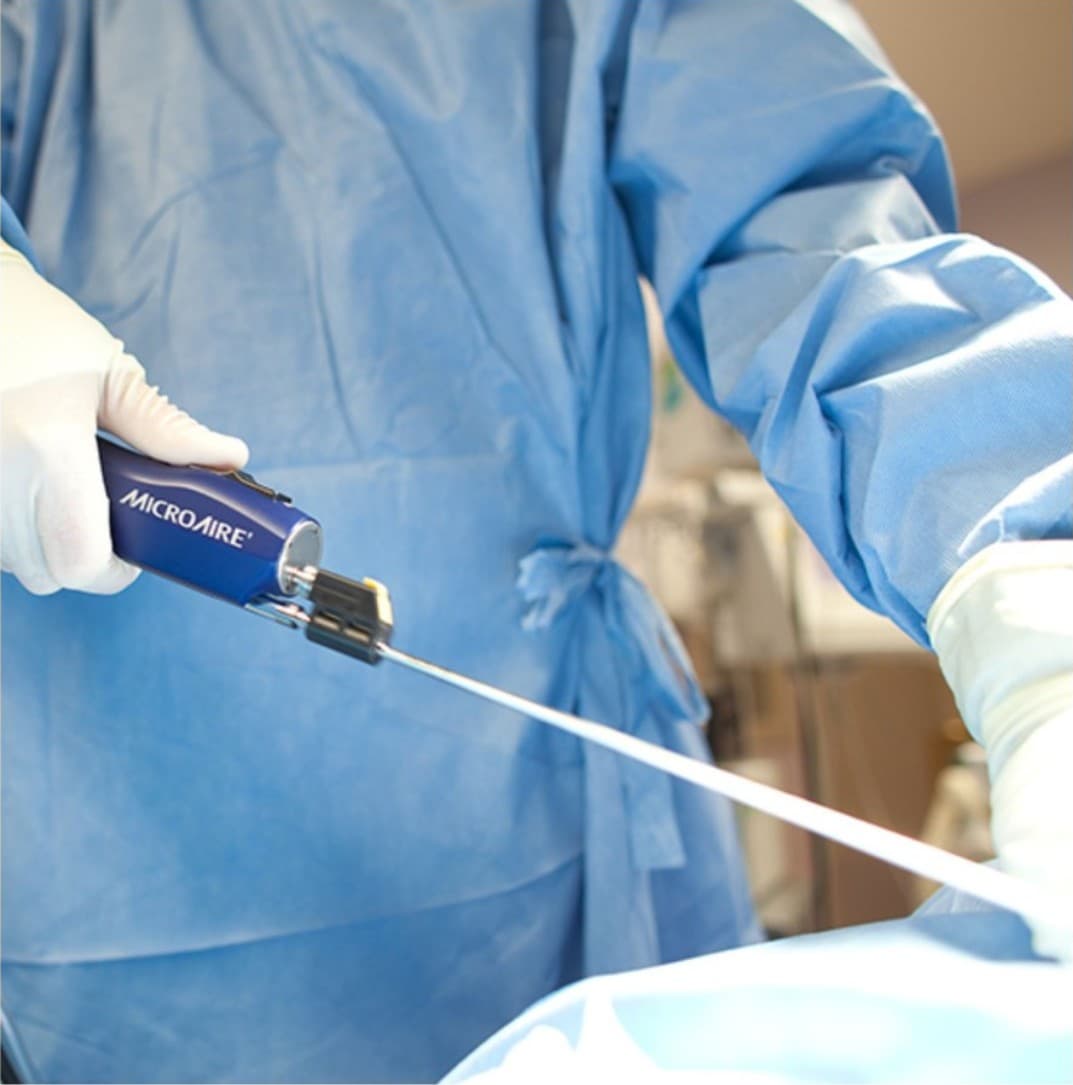
The PAL handpiece helps maintain stable movement and reduce surgeon fatigue in longer sculpting cases.
2. Cannula morphology determines how tissue responds
There is no single best cannula for every case. What matters is the best cannula for the immediate task. Diameter, aperture number, tip design, and shaft curvature all change how tissue is released, how force is distributed, and how much trauma nearby vessels and nerves receive.
- Cannulas from 4 to 6 mm are usually appropriate for deep-layer debulking, where efficiency and volume removal matter most.
- Cannulas from 3 to 4 mm are more suitable for contouring, when the surgeon moves from removing fat to shaping silhouette.
- Cannulas from 2 to 3 mm are reserved for superficial work, transition zones, and areas that demand very high precision.
- Mercedes tips distribute force more evenly for safe bulk removal, Spatula-style tips are useful when protecting the undersurface of the skin, and fibrous-cutting designs are valuable in dense tissue such as the back or flanks.
3. PAL does not replace the surgeon, but it amplifies surgical precision
In modern body contouring, Power-Assisted Liposuction helps the cannula move with short, stable mechanical oscillations. Its real value is not brute force. It allows more consistent tissue release, reduces hand fatigue during long cases, and lowers the risk of uncontrolled suction paths in the final stages of surgery.
When PAL is paired with the correct cannula, the surgeon can move through fibrous septa more smoothly, respect anatomy more faithfully, and preserve cleaner contour lines than with purely manual suction alone.
"“The right cannula does not simply remove fat. It helps the surgeon preserve the structures that must remain intact for a result that is beautiful, stable, and safe.” - Dr. Lê Trung Kiên
4. A clinical workflow is not one suction tip, but an orchestration of tools
A high-definition body contouring case rarely relies on a single cannula. The surgeon changes instruments continuously as the objective changes. This is the difference between “removing fat” and truly redesigning body lines.
- Step 1 - tumescent infiltration: a dedicated infiltration cannula distributes solution evenly, supports vasoconstriction, and minimizes bleeding throughout the case.
- Step 2 - deep-layer debulking: larger multiport cannulas remove the main deep fat volume efficiently and safely.
- Step 3 - intermediate contouring: smaller cannulas begin shaping waist transitions, lumbar lines, and natural anatomical landmarks.
- Step 4 - superficial feathering: ultra-small cannulas with low suction smooth transition zones and prevent visible step-offs.
- Step 5 - tactile verification: machines stop here. The surgeon’s hands and experience detect micro-irregularities that the eye may still miss.
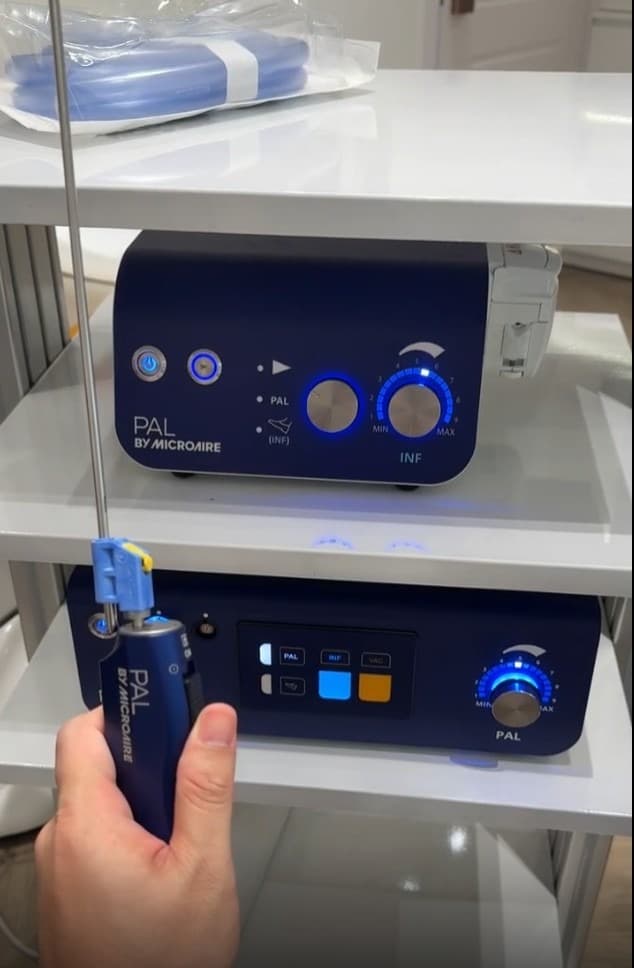
The PAL system supports a standardized workflow, but final quality still depends on correct cannula strategy.
5. Three classic mistakes when the wrong cannula is chosen
- Overusing large cannulas to save time, injuring the superficial fascial support and compromising postoperative skin retraction.
- Violating the superficial layer with an inappropriate tip, creating depressions, adhesions, or long-term contour irregularities.
- Ignoring regional anatomy, especially in dense fibrous zones such as the back or flanks, leading to more trauma, swelling, and less refined definition.
Conclusion
Body sculpting is not a mechanical act of fat removal. It is the intersection of layered anatomy, three-dimensional aesthetic judgment, instrument physics, and clinical decision-making. That is why the cannula is never a trivial detail. It is part of the treatment strategy itself.
When patients ask how a surgeon will choose cannulas for their own tissue structure, the consultation moves away from marketing and into real medicine. That is also where safer, more elegant, and more academic body contouring truly begins.
If you are considering body contouring, the key question is not only which technology is available, but how the surgeon will design the intervention strategy for your tissue structure. Contact RASA Surgical Practice for an in-depth pre-treatment consultation.