

Is the Aesthetic Industry Actually Making the World More Beautiful?
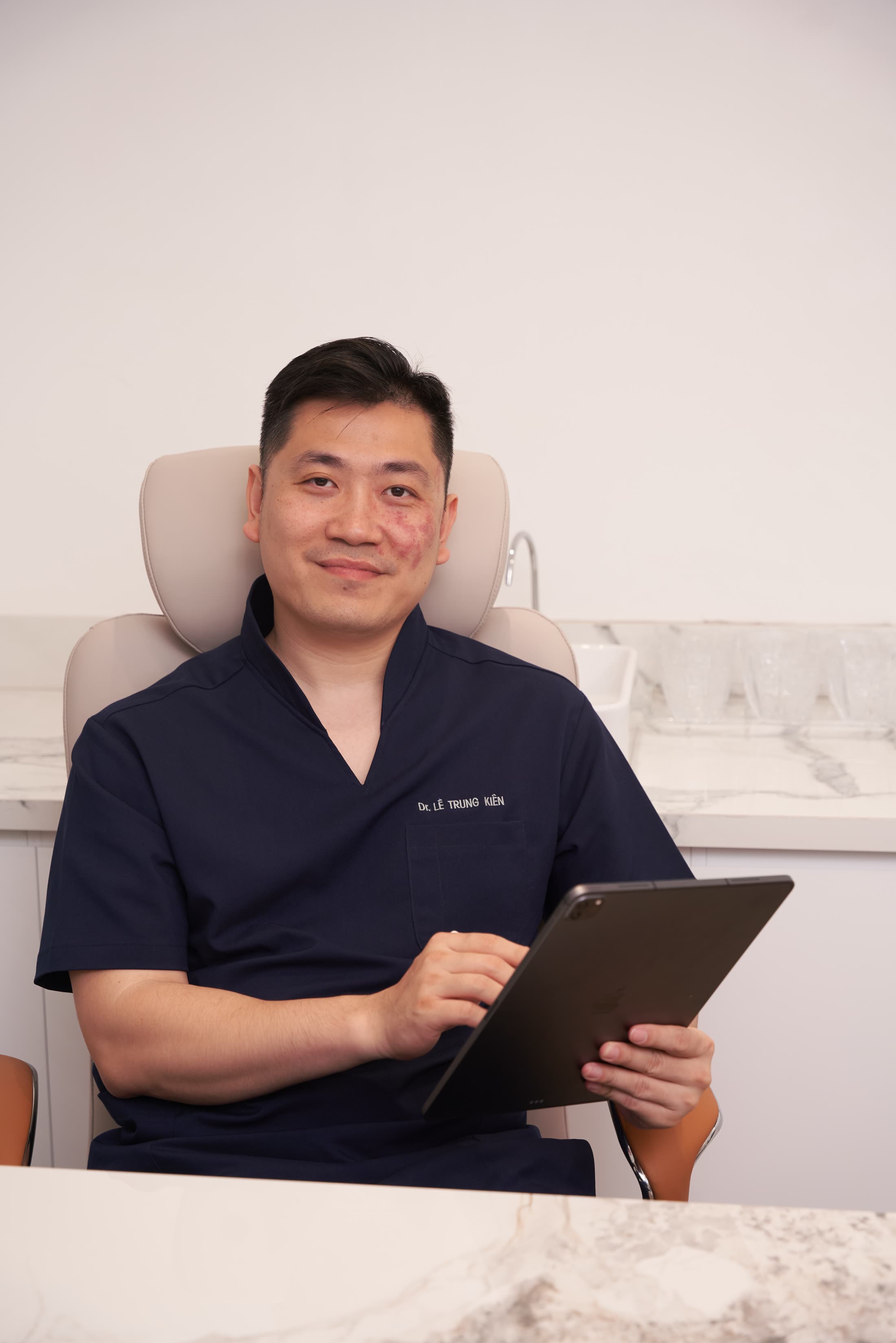
Author
Dr. Le Trung Kien
RASA Surgical Practice
"A question from more than a decade of practice: when does aesthetic medicine restore confidence, and when does it amplify insecurity?"
There's a question I've hesitated to answer directly for over a decade of practice. Not because I don't know the answer, but because a truthful response would raise a very uncomfortable contradiction right at the heart of my profession.
The question is: is the field of plastic surgery, in general, making the world a more beautiful place,
I'm writing this article not to promote or defend the field. I'm writing because I think it's time for those within the field to ask this question themselves, rather than reacting to it from the outside.
What I've seen over the past decade, and what I don't like to acknowledge
Between 2015 and 2020, there was a surge in double eyelid surgery in Vietnam. I don't have exact national statistics, but within the community of plastic surgeons, we all noticed the same trend: millions of single-eyelid eyes became double-eyelid eyes, and most of them looked... similar.
It's not about being identical in a negative sense of technique. Rather, they're all heading towards the same aesthetic template. A template that's not Vietnamese, not specific to any East Asian ethnic group, but one created from Korean idol images on Instagram and smartphone beauty filters.
Then came the V-line chin wave, followed by the high straight nose, and the "perfect oval face". Each year brings a new standard, and each new standard is pursued by hundreds of thousands of people simultaneously, in the same direction, with the same desired outcome.
As I sit and counsel patients, I see them put down their phones, open their filtered images, and say: "I want to be like this." And that "like this" is a digitally processed version, smoothed, symmetrical, and stripped of any signs of being a real person living in the real world. Not someone else's image. Their own, after software has processed it.
The difficult question here is: if I perform that surgery, am I making that person more beautiful, or am I erasing a part of their true humanity,

Câu hỏi đạo đức phía sau ngành thẩm mỹ hiện đại
""I've turned down cases where patients don't need a plastic surgeon. They need a completely different conversation." - Dr. Lê Trung Kiên
The Question That the Beauty Industry Doesn't Want to Ask
This is a question that no one in the industry wants to put into words, because the answer could be very inconvenient: is the beauty industry creating the very need that it sells solutions for,
Not in the sense of a sinister plot. No one sits in a dark room planning to make people feel ugly in order to sell surgery. But in a more subtle, more insidious way: the clinical perspective and medical language that the beauty industry applies to the human body can, and has, created the concept of "problems" before patients even realize they are problems for themselves.
I recall a female patient, around 28 years old, who came to see me about "back fat". She didn't have significant back fat from a clinical perspective. She was at a normal weight, with no issues that any general practitioner would have noted. But she had read enough online, looked at enough "before/after" images on Facebook groups, and now she believed she had a problem that needed to be solved.
I didn't operate on her. But the question I took home with me was: who taught her that it was a problem, And the honest answer is: the beauty industry itself, through marketing, through "educational" content, through the millions of "before/after" images shared everywhere.
This is not an easy question to answer definitively. However, I think it's worth sitting down and pondering it.
THREE QUESTIONS THE BEAUTY INDUSTRY NEEDS TO ANSWER
• Are we liberating the natural beauty within each individual, or imposing an external standard of beauty on people's bodies,
• When a patient says, 'I don't like this about my body,' what percentage of that is genuine feeling, and what percentage is influenced by the information environment they live in,
• If social media were to disappear tomorrow, how many cosmetic surgery requests would cease to exist,
When Robots Can Do Better Than Doctors: What Is Left for Us to Do,
Within the next fifteen to twenty years, AI-supported surgical robots will be able to perform liposuction with greater accuracy than human hands. This is not a hypothesis, but the direction that all major research groups are heading. The cannula depth is controlled to the millimeter, energy is adjusted in real-time based on tissue feedback, and there is no fatigue after the third hour of surgery.
When this happens, the question that arises for every plastic surgeon is: what am I still doing,
Chuẩn đẹp, áp lực xã hội và trách nhiệm của người làm nghề
I have thought a lot about this. And my answer is: it's not the technique. The technique will be replaced, in part or entirely, and we should be honest about this rather than denying it. What machines cannot replace is clinical judgment in the context of a specific individual, and more importantly, the ability to ask the right question before starting.
An AI system, no matter how accurate it is in terms of technique, cannot ask the patient: 'What is it that is really making you want to change this, ' It cannot recognize when a patient comes to the consultation with a pain that is not related to their physical appearance. It cannot refuse surgery because the patient is not yet psychologically ready, even though they are technically a perfect candidate.
The future of skilled plastic surgeons, in my opinion, does not lie in their hands being more dexterous than robots. It lies in their understanding of humans better than any system. That is something that is not being taken seriously enough in training today.
""In the next ten years, a skilled doctor is not the one who holds the scalpel most skillfully. It is the one who knows when not to hold the scalpel." - Dr. Lê Trung Kiên
Democratization of beauty: Is it good or not,
One of the things often touted as "progress" in the field of beauty is that beauty treatments are becoming more accessible. Twenty years ago, plastic surgery was a privilege of the wealthy. Now, in Hanoi or Ho Chi Minh City, a double eyelid surgery can be performed at a cost equivalent to a few days' wages. And people often say this as if it's not up for debate: greater accessibility is better.
I am not entirely sure that is true.
When prices drop low enough, the pressure of competition forces someone to cut back somewhere. Usually, it's in training, equipment, consultation time, or safety protocols. I've seen patients come to my clinic after undergoing procedures at significantly cheaper places, bringing with them results that are clearly subpar, and their stories often begin with: 'I did it because it was cheap.'
In Hanoi, I know of spas that call themselves 'clinics' and perform invasive procedures that, according to the law, only certified specialists are allowed to do. These places exist not because the law is lacking, but because demand is high and oversight is insufficient. And when something goes wrong, the patient, not the clinic owner, bears the consequences.
Democratizing aesthetics is only beneficial when accompanied by democratization of quality and safety. Without the latter, the former merely expands access to risk.
So why do I still believe the future will be better,
Given everything I've written so far, a reasonable question is: so you still do this job, why,
My true answer is not a flattering one. I still practice, in part, because I've invested too much to give up, and in part, because I genuinely believe in the cases I handle. However, the reason I believe in the future of the field is not because I've resolved the conflicts mentioned earlier. It's because I see changes taking place, albeit slowly but genuinely.
Firstly, the current generation of young patients, particularly those born after 2000, have a different perception of the body compared to previous generations. I'm increasingly encountering young patients who come to the clinic not to "be beautiful according to standards" but to "look like themselves as they feel about themselves." This is a significant difference. It's no longer about conforming to external models, but about being true to oneself.
Khi làm đẹp cần được đặt trong bối cảnh con người
Secondly, the body positivity movement, despite ongoing debates about its implementation, is genuinely changing the language people use when discussing their bodies. Patients are increasingly saying "I want to adjust this because it makes me uncomfortable with myself" rather than "I hate this about myself." The same request, but with a completely different emotional starting point. And this starting point has a significant impact on whether the outcome of surgery truly makes the person happier.
Thirdly, and this is what I believe most strongly, I see an increasing number of young doctors in the field asking the right questions. It's no longer "how can I make this case perfect in terms of technique," but "should this case be performed and why." If this generation of doctors matures properly, they will shape the field in the direction I want to see.
WHAT I WANT TO SEE IN THE VIETNAMESE PLASTIC SURGERY FIELD IN THE NEXT 10 YEARS
• Basic psychological training is now integrated into the curriculum for plastic surgeons, not as an ancillary subject but as a core competency.
• A clear minimum standard for preoperative consultation time is established, allowing for a thorough evaluation of motivations and expectations, not just medical considerations.
• A national system for tracking complications and long-term outcomes is established, providing the industry with reliable data rather than selectively chosen before-and-after images.
• Patients have easier access to information about the realistic limitations of each procedure, not just marketing materials from clinics.
• The legal distinction between medical aesthetic surgery and aesthetic beauty services is strictly enforced, not just on paper.
The Question I Still Do Not Have an Answer For
I do not conclude this article with a neat conclusion, because I do not have a neat conclusion.
I still do not know how a business can be both truthful to patients about what they truly need and financially sustainable when the correct answer is sometimes "you do not need surgery at all." This is a structural contradiction that I have not resolved, only tried to manage on a case-by-case basis in my own practice.
I still do not know how to clearly distinguish between patients who want to change due to internal reasons and those who want to change due to internalized social pressure that has become their inner voice. The boundary is blurry and I am not always confident that I can read it correctly.
And I still do not know if the good that I do in each individual case can overcome the bad that this industry creates at the societal level. This is a question that I may never have a satisfactory answer to.
However, I think it's more important to ask the question than to have an answer. The field of aesthetic medicine needs more people to ask tougher questions than to provide easy answers. And the patients, who are ultimately paying for this entire system, deserve to know that there are doctors who are genuinely thinking about these issues, not just about the next technique.
""A good aesthetic doctor is not someone who always knows what to do. It's someone who never stops wondering if they're doing the right thing." - Dr. Lê Trung Kiên
The world will be a more beautiful place, but not in a predictable way
My answer to the initial question, after over a decade and thousands of cases, is: yes, aesthetic medicine can contribute to making the world a more beautiful place. But not because it creates more beautiful faces according to a single standard. Rather, when practiced correctly, it can help a person look in the mirror and see the person they want to become, not the person society wants them to be.
Those are two very different things. And the gap between them is where aesthetic medicine will either find its true meaning or continue to be a machine that sells solutions to problems it has itself helped create.
I choose to believe in the first possibility. Not because I am naive. But because there is no other option that is worthy of being a profession.
Dr. CKII Lê Trung Kiên
Board-certified Specialist II in Plastic Surgery with many years of experience in advanced body sculpting. This article reflects the author's personal perspective on the questions that the field of aesthetics has not yet been ready to answer, and does not represent any organization or association.