
Active Tissue Contraction in Body Contouring Surgery
Author
Dr. Le Trung Kien
RASA Surgical Practice
"Why skin laxity after body sculpting requires more than fat removal, and how applied energy can support controlled tissue contraction."
Expert Analysis by Dr. Lê Trung Kiên, RASA Surgical Practice
Introduction: The Gap in Pure Volume-Reduction Thinking
In body contouring surgery, a long-standing assumption has been that once fat is removed, the overlying skin will automatically redrape itself to create a slimmer silhouette. This idea originated in the early era of liposuction, when the only goal was to reduce body volume. From the perspective of modern plastic surgery and high-definition body sculpting, that assumption has shown its limitations.
Clinical reality shows that when a large amount of fat is removed, the body is left with a significant internal void. In younger patients with abundant collagen reserves, the skin may contract on its own thanks to natural elasticity. However, in many patients, especially women after childbirth, people with repeated weight fluctuation, stretch marks, or weak connective tissue, the skin cannot retract completely. The result is residual laxity, wrinkling, or abnormal folds after surgery. Even a technically excellent liposuction procedure may still be judged incomplete if loose skin remains.
This creates a second problem: removing fat is only the first step. The second step, and the one that truly determines the sharpness of the final contour, is controlled intervention to help the soft tissue and skin contract more effectively so they can better conform to the newly sculpted anatomical lines. The era of active tissue contraction emerged from that very understanding.
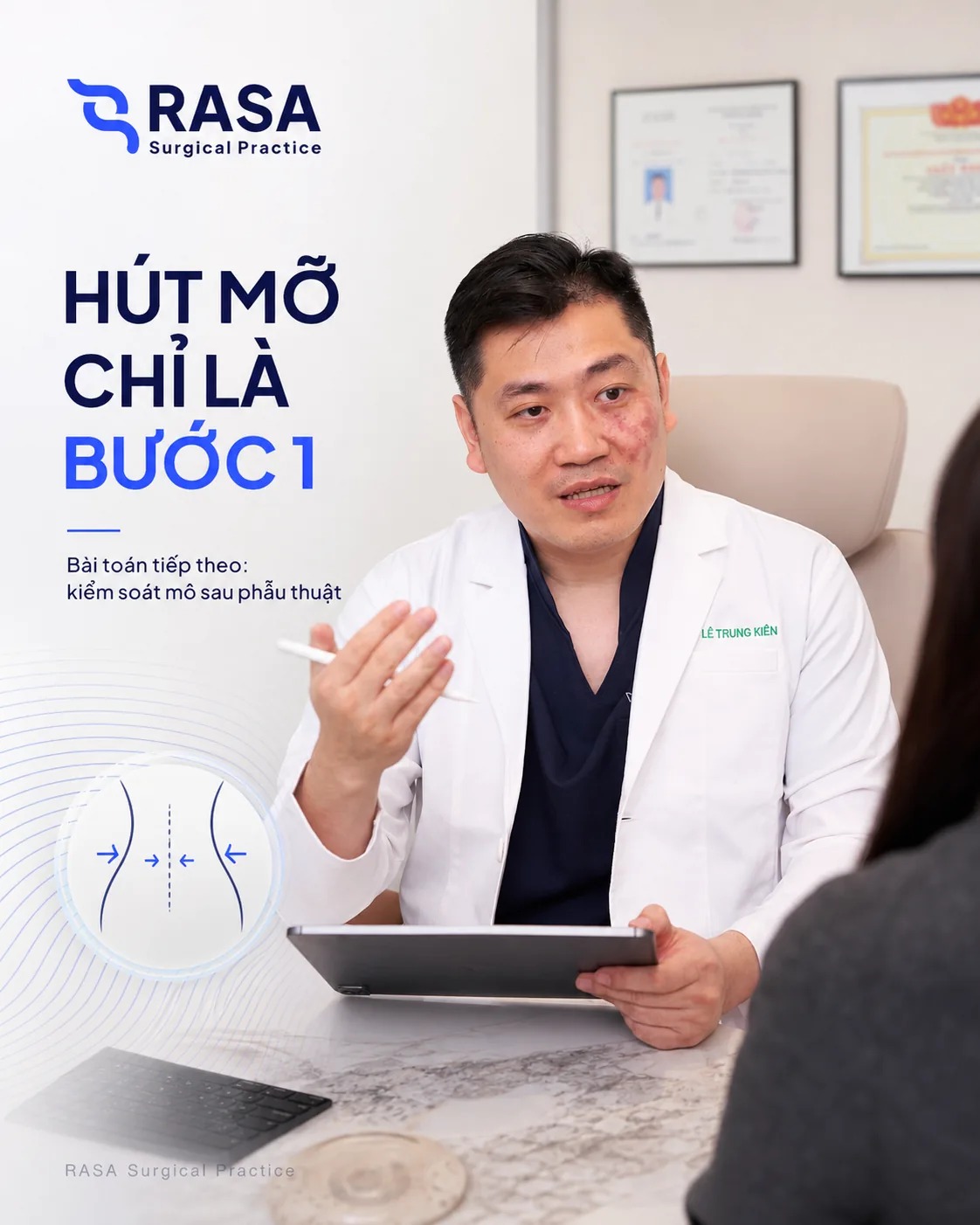
Liposuction is only step one. The next challenge is postoperative tissue control.
1. The Anatomical and Physiological Basis of Skin Laxity
To address postoperative tissue looseness, the surgeon cannot focus only on the skin surface. The key lies in understanding the microscopic structures beneath it, especially the fibroseptal network of the subcutaneous layer.
Microscopic structure of the fibroseptal network: This network is a dense system of connective tissue strands made primarily of collagen and elastin fibers. They can be imagined as thousands of tiny elastic cords, with one end anchored to the deep fascia and the other attached to the underside of the skin. Their function is to keep the skin from shearing away from the body during movement while also creating compartments that contain fat lobules.
Mechanical injury and loss of elasticity: During pregnancy, weight gain, or natural aging, expanding fat lobules stretch these fibrous septa. Once physiological elasticity is exceeded, collagen microfibers within the septa become disrupted or elongated. When the surgeon introduces a cannula to remove fat, that mechanical action also further disrupts part of the network.
As a result, after a substantial amount of fat is removed, the skin loses support from beneath while part of the fibroseptal system has already been weakened or overstretched. If the body is left to heal on its own, those septa will scar and adhere in that already lax state. Clinically, the skin and subcutaneous tissue may fail to redrape closely onto the deeper plane, creating looseness, rippling, or visible sagging.
2. The Molecular Physiological Basis of Thermal Contraction
Because the skin and fibrous septa do not reliably shorten on their own, modern medicine uses external physical forces. Today's tissue-tightening technologies share the same physical principle: using heat to induce structural denaturation of collagen.
Immediate denaturation response: The collagen molecule has a triple-helix structure stabilized by weak hydrogen bonds. When collagen fibers within the fibroseptal network are heated to an appropriate threshold, those hydrogen bonds break apart. The helical structure relaxes and shortens. In some mechanistic models and reports, collagen may contract meaningfully once it reaches the right thermal threshold, although the actual clinical degree of contraction still depends on skin quality, tissue thickness, technical execution, and patient biology.
Long-term biological remodeling response: Delivering heat into the subcutaneous layer creates a controlled microscopic injury that activates the body's natural inflammatory cascade. This process stimulates fibroblasts to migrate into the area and synthesize new collagen and elastin networks over the months following surgery, contributing to more durable tissue restructuring.
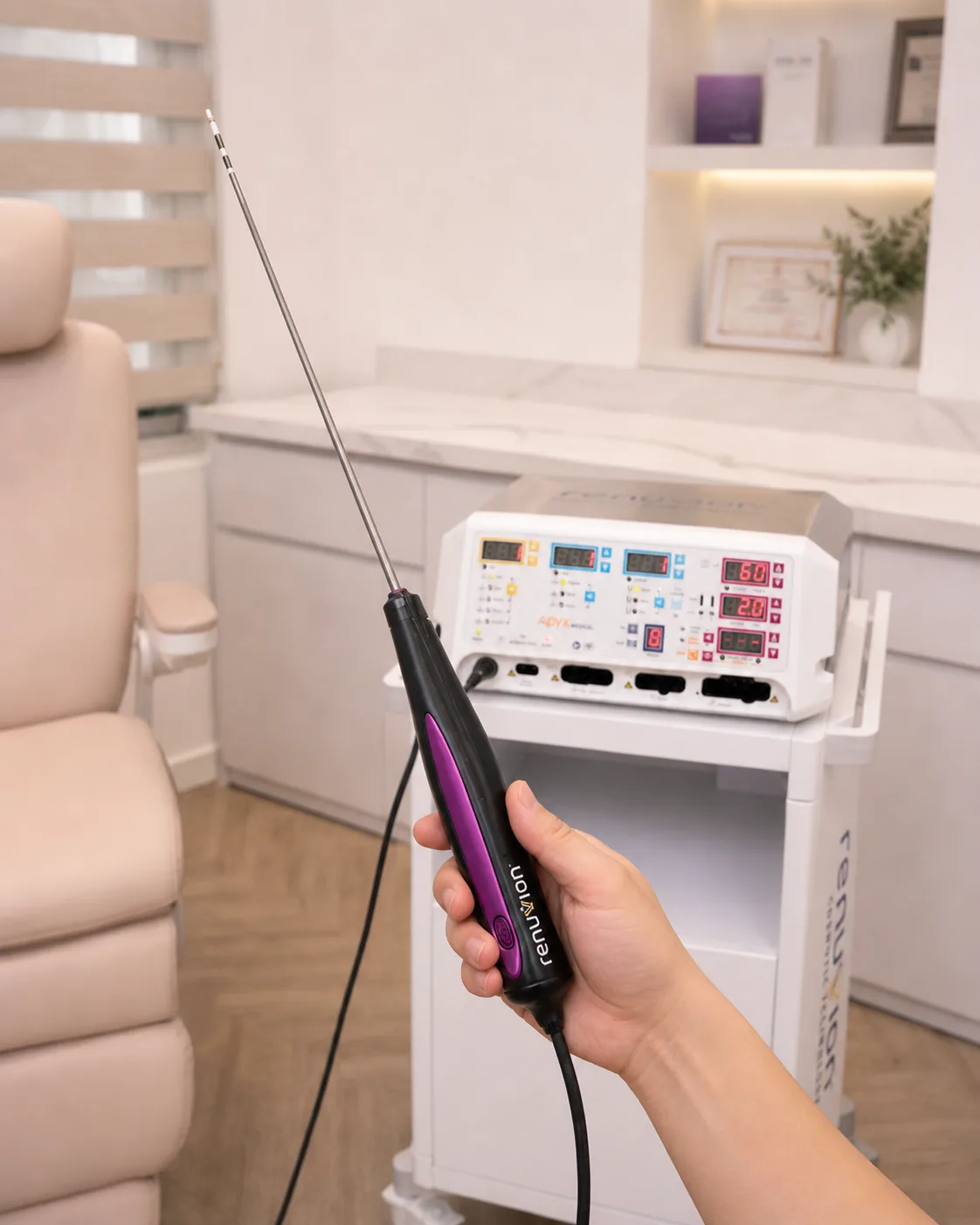
The Helium Plasma handpiece used in tissue-contraction support procedures.
3. Analysis of Energy-Based Technologies in Surgery
The overview below is intended to summarize mechanisms, not to declare one technology universally superior. Outcomes and complications depend heavily on indications, the specific device, technical settings, and surgeon experience.
Internal laser energy: A very fine optical fiber delivers laser energy into the fat layer. The laser generates heat that spreads to the surrounding fibrous septa. This method can support hemostasis well, but the lateral thermal spread must be controlled carefully to reduce the risk of injury to adjacent tissue.
Ultrasound energy: High-frequency sound waves create cavitation, helping disrupt fat cell membranes while generating mild heat. This can be useful in fibrotic areas, but the degree of heat available for true collagen contraction is usually moderate.
Radiofrequency energy: Alternating current passes through tissue and produces a steady, deeper heat from within outward. This can support skin contraction and often includes skin-surface temperature sensing, but heat transfer still requires time and careful monitoring to reduce epidermal injury risk.
Helium Plasma combined with radiofrequency: Often described in the media as cold plasma, it is in fact still a controlled thermal technology used within the subcutaneous layer. Radiofrequency energy ionizes helium gas to create a plasma stream, rapidly transferring heat into the subdermal tissue and producing controlled soft-tissue coagulation or contraction in the treatment zone. Its pattern of rapid heating and rapid cooling can help limit thermal spread toward the skin surface when used with correct indications, correct planes, and correct settings. Even so, strict safety protocols remain essential to reduce the risk of burns, tissue injury, or complications related to helium gas.
Although subdermal energy platforms, including helium plasma combined with radiofrequency, have mechanistic reports and clinical data suggesting potential support for tissue contraction, their real-world effectiveness still needs careful case-by-case interpretation. They are not substitutes for excisional surgery in cases of severe excess skin, and they should not be presented as guaranteed promises of postoperative tightness.
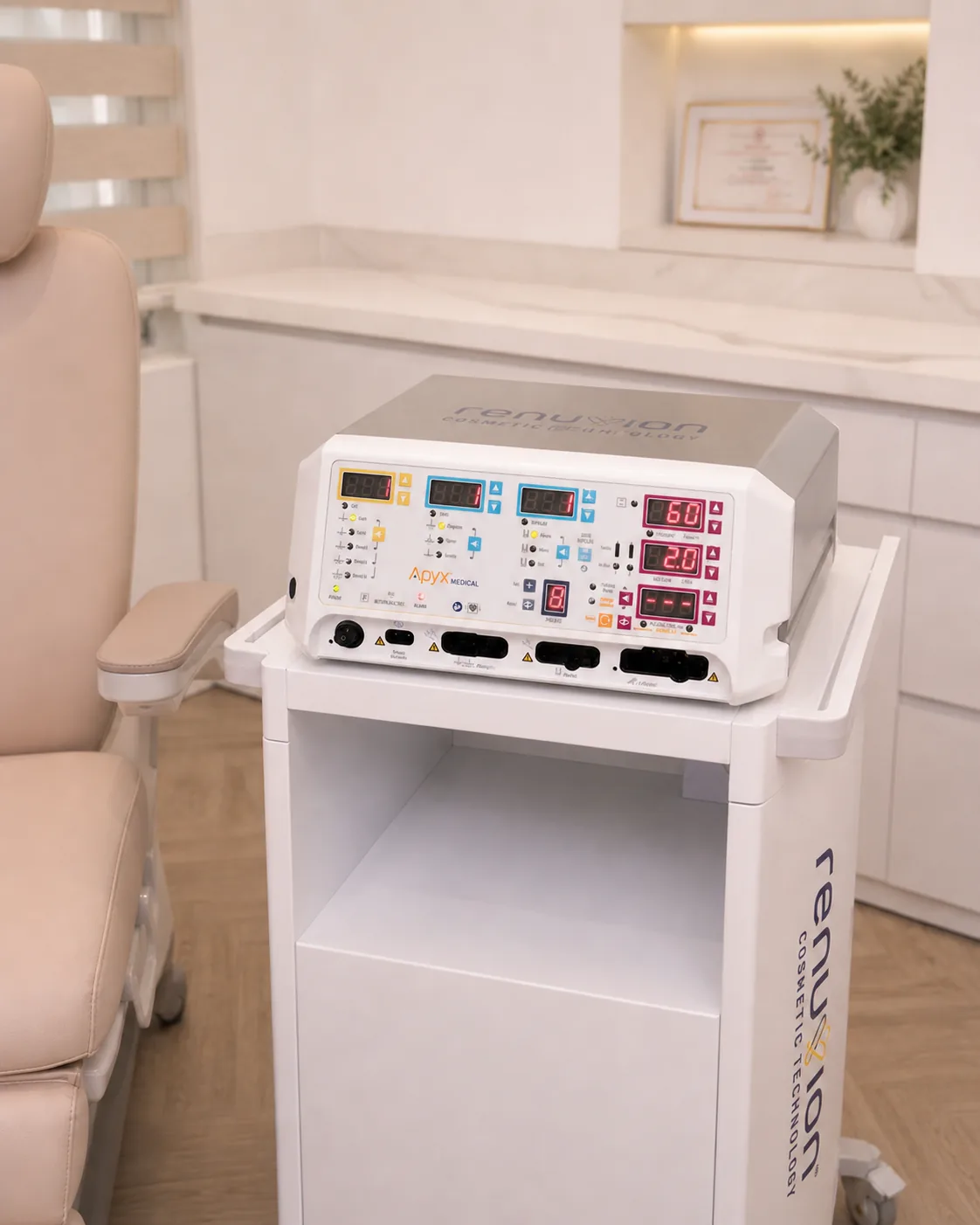
The Renuvion console used in active energy-based tissue contraction procedures.
4. Clinical Examination and Decision-Making
Decision-making must begin with static and dynamic clinical examination. The specialist performs physical assessments to compare subcutaneous fat thickness against the degree of tissue laxity, while also integrating parity history, stretch marks, and body mass index.
Patients with stronger indications or who should be considered for combined energy-assisted tightening: postpartum women with mild to moderate abdominal laxity, the inner thighs, and the posterior upper arms, all areas where the skin is thin and gravity exerts stronger pull. For patients seeking more visible etched definition, tissue-contraction energy may be an important adjunct to help the skin conform more closely to the newly sculpted foundation.
Patients who may require a different or combined surgical plan: severe skin laxity, broad areas of stretch-damaged skin, or associated rectus diastasis. When excess skin volume is too great, it exceeds what energy-based contraction can realistically achieve. In many such cases, the more medically appropriate option is formal skin excision, abdominal wall management, or both when indicated.
5. The Practical Philosophy at RASA Surgical Practice
Energy-based devices are support tools that help surgeons perform more advanced interventions. At the RASA Alliance of Plastic and Reconstructive Surgery, our working principle is evidence-based medicine. Decisions about which platform to use are grounded in published safety and efficacy data together with individualized clinical assessment.
A body-sculpting procedure is a combination of reducing fat in the correct anatomical layer and stimulating tissue contraction in the right regions. Our goal is to use science to support each person's own capacity for tissue renewal and restoration of natural contour.
RASA Surgical Practice acknowledges the partnership of strategic collaborators in supplying internationally standardized medical devices, including energy platforms from Viet Can, helping ensure that clinical interventions meet appropriate safety standards.