
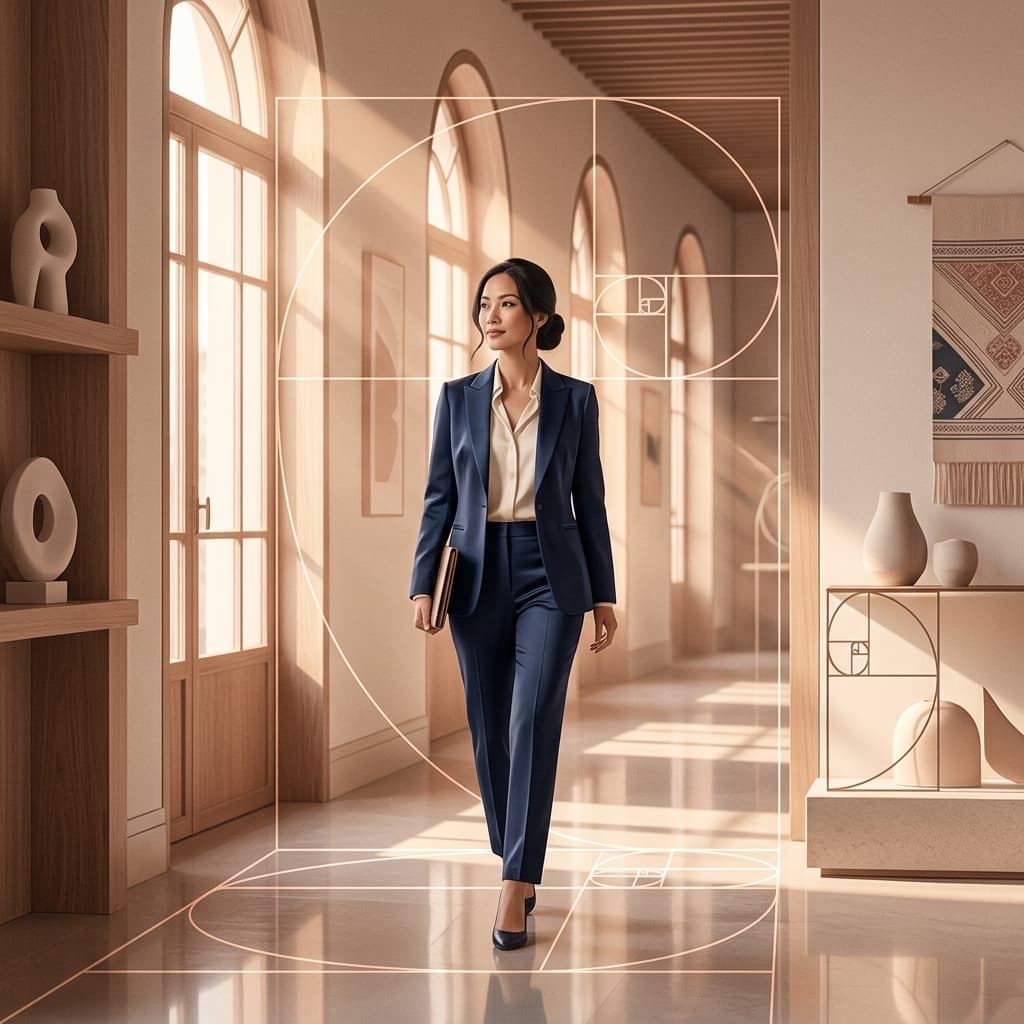
Beauty Bias: How Appearance Shapes Opportunity
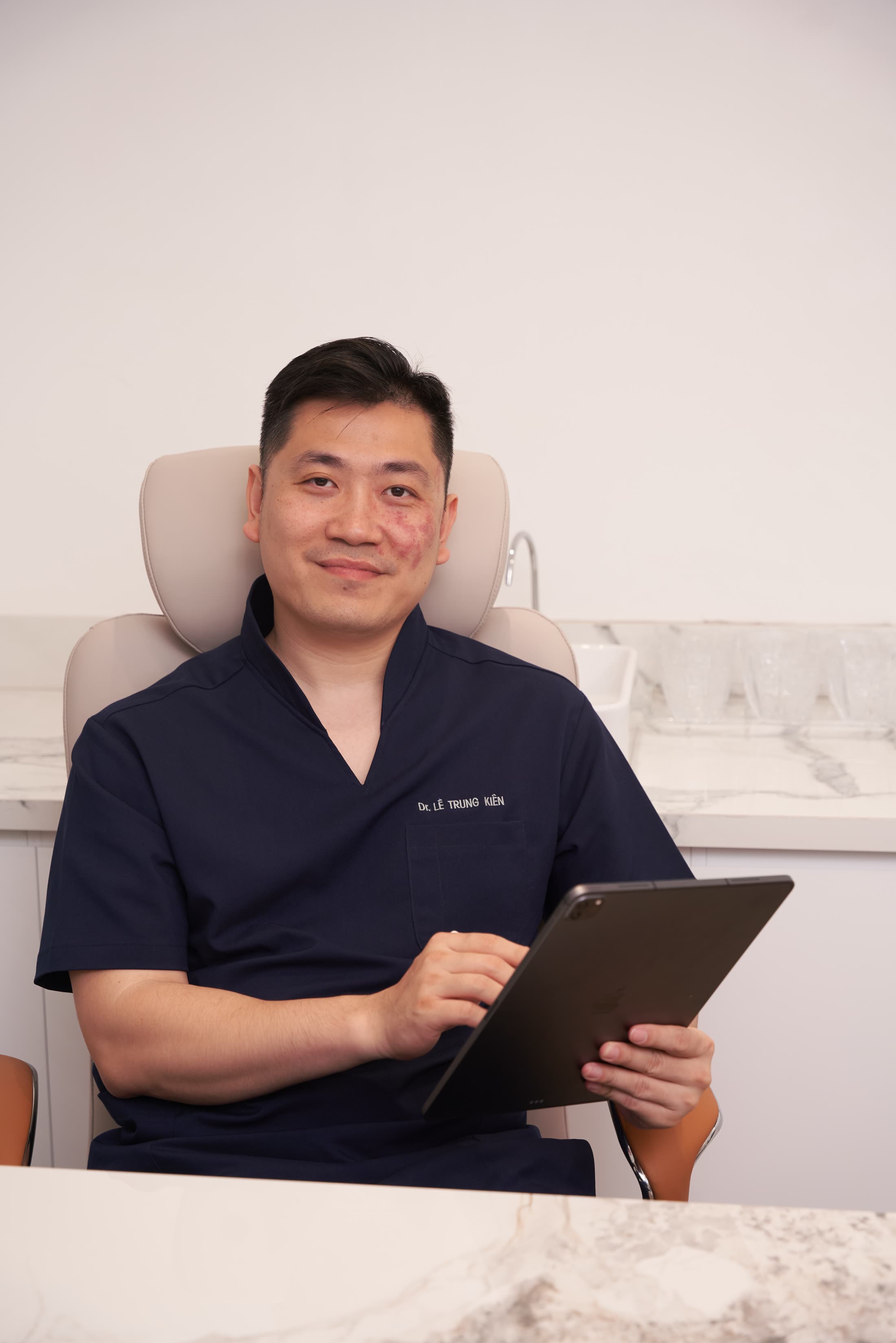
Author
Dr. Le Trung Kien
RASA Surgical Practice
"Appearance influences how people are perceived, trusted and treated. Understanding that bias is the first step toward making more conscious decisions."
Imagine this scenario. Two individuals applying for the same position. Both have the same qualifications, experience, and skills on paper. But one person has a more attractive physical appearance. Who gets the job,
The answer, according to dozens of scientific studies spanning over 30 years, is the person with a better physical appearance. Not because employers are biased. Rather, the human brain operates in this way. And none of us are immune to it.
I'm writing this article not to make you feel unjustly treated. I'm writing because, after many years in the field of aesthetics, I believe understanding the mechanisms of a problem is the first step to proactively addressing it. The aesthetics industry is often viewed as superficial. But when placed in a sociological context, the story becomes more complex and substantial.
The Data Does Not Lie
In 2025, a study from the University of Southern California and Carnegie Mellon University tracked over 43,000 MBA graduates for 15 years. The results: individuals with a more attractive physical appearance earned an average of $2,508 per year more than their peers with similar qualifications. For the top 10% of the most attractive group, this figure increased to $5,528 per year. Cumulatively over a career, this is a significant financial gap.
But the more striking figure is this: individuals with better physical appearance have a 52.4% higher chance of securing a prestigious job after 15 years. Not because they work harder. Because people perceive them differently from the moment they open their mouths.
Economists Hamermesh and Biddle published a 1994 study showing that more attractive individuals are paid 12 to 17% more for the same work, even after controlling for all other variables. More than two decades of subsequent research have failed to refute this finding. It even has a name in economics: beauty premium, the reward for physical appearance.
A more striking experiment: in a labor market experiment, more attractive individuals did not solve the maze faster, i.e., they were not actually more productive, but still earned a 12 to 17% higher wage. Only 40% of this wage gap came from employers seeing them. The remaining 40% came from more attractive individuals interacting better in social situations. And the final 20% came from the confidence that physical appearance instills in them.
+52%
Chance of securing a prestigious position
higher after 15 years of career
$2.508
Additional annual income
on average, for those with better physical appearance
45 countries
The Halo Effect Is Deciding Your Fate, More Than You Think
cross-cultural study, 11,000 people
The Halo Effect: A Brain Mechanism No One Can Escape
So why does this happen, The answer lies in a psychological phenomenon known as the halo effect, which psychologist Edward Thorndike first described in 1920 through a study of military officers. He found that when an evaluator sees someone who stands out in one characteristic, they tend to rate that person highly in all other aspects, including those completely unrelated.

Beauty bias và cách ngoại hình tác động đến cơ hội xã hội
With physical appearance, this mechanism operates particularly strongly. The brain processes attractive faces more quickly and easily. And that ease of processing is misinterpreted by the brain as a safety signal, a trustworthy signal. From an evolutionary perspective, anything smooth and easily recognizable typically means familiarity, safety. The brain cannot distinguish between "symmetrical face" and "trustworthy person" because both activate the same brain region.
The result is that before that person speaks a word, you have already decided they are more capable, smarter, and more trustworthy. And you don't even realize you're doing it.
A 2023 study published in Current Psychology analyzed data from 45 countries with over 11,000 participants, concluding that the halo effect from physical appearance is a cross-cultural phenomenon. Across 11 cultural regions, from Asia to Africa to Latin America, faces deemed attractive were consistently associated with qualities such as greater confidence, emotional stability, intelligence, responsibility, and trustworthiness.
""The human brain doesn't ask: Is this person skilled, It asks: Is this person safe, And an attractive face answers that question before anything else happens."
What's even more concerning is that even those with experience and high positions are not immune to this trend. A study on accounting firms in Israel found that both high-level and low-level managers tend to prioritize more attractive applicants with equivalent qualifications. Knowing you're influenced doesn't mean you're not influenced. That's what makes the halo effect so particularly difficult to counter.
In business: Trust is money, and physical appearance is the interest rate
Beauty bias doesn't stop at the job interview. It seeps into the meeting room, into the negotiation table, into any situation where you need someone to trust you within the first few minutes.
Salespeople with better physical appearances get scheduled for product demos more often and close more deals, under the same conditions. In service-based businesses, where customers have no way to evaluate quality before experiencing it, the physical appearance of the service provider becomes one of the primary signals to decide whether to trust or not.
In the world of social media, this pressure is even more evident. You have 2 to 3 seconds to make an impression through a LinkedIn profile picture, a YouTube thumbnail, or the first frame of a TikTok video. Within that time, the viewer's decision to continue or not is largely determined by unconscious, non-cognitive reactions, not by the content. Good content needs a door to enter. Physical appearance affects whether that door opens or not.
Research also reveals an even more interesting result: in the maze experiment mentioned earlier, 40% of the attractiveness advantage in salary comes from the quality of verbal communication, meaning they actually express themselves better in direct interaction. Part of the explanation lies in the accumulated self-confidence from being treated better over the years, which creates genuine social skills. This loop, where better physical appearance leads to being treated better, leads to greater confidence, leads to better social skills, leads to better results, starting from very early in life.

Não người thường đánh giá năng lực qua ấn tượng ban đầu
HOW THE HALO EFFECT MANIFESTS IN REAL LIFE
• Recruitment: more attractive candidates are evaluated as having higher potential before the interview even begins.
• Career advancement: individuals with a good physical appearance are perceived as having higher leadership potential.
• Business: more attractive individuals are trusted faster in negotiations and sales.
• Social media: more attractive thumbnails and profile pictures have higher click-through rates.
• Law: research shows that more attractive individuals receive lighter sentences for the same crimes.
What Nobody in the Beauty Industry Dares to Say
As a plastic surgeon, I want to say something that my field often avoids.
Plastic surgery is often framed as "doing something for oneself," "loving oneself," and "feeling more confident every day." These things are not wrong. But if we stop there, we're overlooking a larger reality.
For many people, the decision to undergo cosmetic intervention is a strategic decision, whether conscious or not, about how to position themselves in their social and professional environments. A 35-year-old woman who wants to get a facelift may not just want to look younger. Perhaps she's preparing for a job interview, an important presentation, or simply wants to regain a sense of control during a period of life change. A man who wants to get a rhinoplasty may not just want to look better. Perhaps he knows that in his industry, first impressions count for a lot.
I'm not saying this to justify any cosmetic decision. I'm saying it to acknowledge that people don't make decisions in a vacuum. They make decisions in a society with a very specific and measurable structure of rewarding physical appearance.
""Cosmetic surgery, at its deepest level, is not just about changing one's physical appearance. It is a tool that people use to renegotiate their position in a world where physical appearance has real weight."
Boundaries need to be clearly defined
But this is what I want to emphasize most.
The data on beauty bias is real. The halo effect is real. Beauty premium is real. But from 'real' to 'I need to change my physical appearance' is a step that requires careful consideration, not a given.

Ngoại hình không quyết định tất cả, nhưng hiếm khi vô hình
Social media is creating pressure through a different mechanism. Beauty bias exists in real life, as a subtle influence from social structure. But Instagram filters, AI photo editing, and constant exposure to edited faces create a 'beauty standard' that does not exist in nature, and the pressure to meet that standard is something entirely different.
In the consultation room, what I always try to distinguish is: does this person want to change from a clear understanding of themselves, or from external pressure internalized into inner speech, Although they look similar, they lead to very different outcomes after intervention.
Those who understand what they want, why they want it, and their realistic expectations for the outcome, are usually satisfied after surgery. Those who are running away from something or trying to achieve an unrealistic standard often do not find what they are looking for, no matter how good the result is.
QUESTIONS TO ASK YOURSELF BEFORE ANY DECISION RELATED TO EXTERNAL APPEARANCE
• Do I want this for myself, or for someone else in my head,
• Are my expectations based on reality, or am I comparing myself to a retouched photo,
• If no one knows I've changed, would I still want to do it,
• What I really want to change is my physical appearance, or my self-image,
Beauty as a social force, not just a service industry
I began this article with a question about job hiring. But beauty bias isn't just a workplace issue.
It affects how you're treated in a clinic, in court, in personal relationships. Research shows that children perceived as attractive receive different attention and educational investment from teachers, even unconsciously. Those deemed more attractive receive lighter sentences for the same crime. More attractive patients may receive more detailed explanations from doctors.
These facts do not imply a fair or just system. They imply that physical appearance, whether we like it or not, is a social currency being circulated in the real world, not just in the imagination of the beauty industry.
Understanding this does not mean changing one's physical appearance. It means facing a reality that society either denies or exaggerates to an unnecessary extent.
My position, after many years in the field, is between these two extremes. Physical appearance has real weight in life. And each person deserves to have enough information to decide what to do with it, not be led by fear or pressure, but by knowledge.
""The beauty industry does not create physical pressure. It exists because that pressure has been and is still there for a long time. The correct question is not whether to intervene, but why and with what expectations." - Dr. Lê Trung Kiên
Conclusion: There is no simple answer
This article does not provide specific advice on what you should or should not do with your physical appearance. Each person has their own circumstances, values, and priorities.
What I hope you take away from this article is a more accurate picture of the mechanisms that are actually at play around physical appearance in society. No sugarcoating. No melodrama.
Beauty bias is real, measurable, and does not disappear when we pretend it does not exist. But it is also not destiny. And it is certainly not the sole reason for any decision.
In the next articles of this series, I will look more closely at other aspects of the relationship between aesthetics and society, a topic that few in the field dare to address directly. Not to support or oppose anything, but to add a less common perspective from someone sitting on both sides: the operating room and scientific research.
Dr. CKII L, Trung Ki, n
Plastic Surgeon Specialist II. Many years of clinical practice and research on the intersection of aesthetic medicine, psychology, and social factors influencing patient decision-making.
The "Aesthetic & Society" series is a collection of expert analyses of understudied dimensions in the field, aimed at readers seeking a more comprehensive understanding beyond the surface level.